

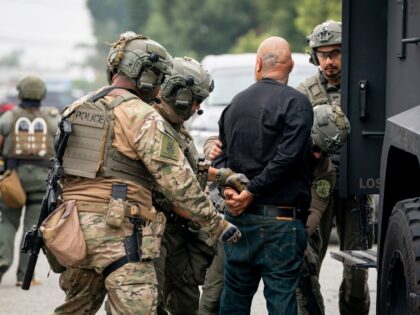
The House Judiciary Committee’s July 22 hearing on Delaney Hall is more than a routine oversight exercise; it is a live demonstration of how federal agencies treat the people they confine and, by extension, how they might treat the rest of us if the political winds shift. When lawmakers grill ICE officials about overcrowding, medical neglect, and due-process shortcuts, they are also exposing the same bureaucratic reflexes—indifference to individual rights, reflexive secrecy, and mission creep—that historically turn civil detention into something closer to punishment without trial. For Second Amendment supporters, the lesson is straightforward: any apparatus powerful enough to warehouse non-citizens without meaningful judicial review can be repurposed, with the stroke of a pen or a midnight regulation, against citizens whose only offense is owning a banned configuration of a firearm or belonging to the wrong political list.
What makes the hearing especially relevant to the gun-rights community is the quiet overlap between immigration enforcement tools and emerging gun-control proposals. Proposals to “red-flag” individuals through administrative databases, share fingerprints across federal agencies, or even disarm people whose immigration status is suddenly deemed unlawful all rely on the same data pipelines and detention capacity now under scrutiny at Delaney Hall. If Congress allows ICE to operate black-box facilities with minimal transparency, it normalizes the idea that the federal government can suspend core liberties first and answer questions later—an approach that gun owners have seen applied to bump-stock owners, pistol-brace users, and small-Federal Firearms Licensees. The hearing therefore serves as an early-warning system: the infrastructure being debated today could easily become the enforcement arm of tomorrow’s gun confiscation orders.
Ultimately, the 2A community should treat Delaney Hall not as someone else’s problem but as a stress test of constitutional guardrails. Every additional layer of secrecy, every waiver of warrants, and every expansion of administrative detention lowers the bar for future rights violations. If lawmakers walk away from this hearing without imposing real-time public reporting requirements and hard caps on detention capacity, they will have signaled that federal agencies can operate above the Constitution whenever the subject is unpopular. Gun owners who fail to notice that signal will be reading about their own facilities soon enough.


