

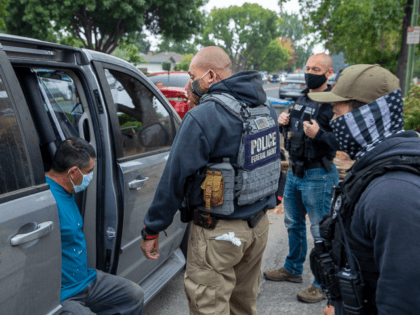
In a move that underscores the administration’s commitment to restoring order at the southern border, President Trump’s signing of the Secure America Act delivers both immediate resources and long-term strategic advantages for the agencies tasked with immigration enforcement. By boosting funding for ICE and Border Patrol, the legislation equips agents with upgraded surveillance systems, additional detention capacity, and modernized transport fleets—tools that have historically proven essential when federal officers must operate in high-threat environments where criminal cartels and transnational gangs exploit porous crossings. For the firearms community, this isn’t merely an appropriations bill; it’s a tacit recognition that armed professionals on the front lines need reliable equipment and legal backing to neutralize armed smugglers who increasingly favor full-auto conversions and armor-piercing loads smuggled alongside narcotics.
The ripple effects for Second Amendment advocates are both practical and philosophical. Every additional Border Patrol recruit trained under these new budgets represents another federal officer whose daily carry and use-of-force decisions will be shaped by the same constitutional principles that protect law-abiding citizens’ right to keep and bear arms. Moreover, the legislation’s emphasis on interior enforcement sends a clear market signal: demand for duty-grade optics, plate carriers, and patrol rifles is poised to climb as agencies scale up, potentially accelerating innovation and keeping prices competitive for civilian shooters who rely on the same supply chains. At a deeper level, the Secure America Act reframes border security as an exercise in ordered liberty rather than abstract humanitarianism—reminding voters that secure sovereignty is the precondition for any meaningful debate over individual rights, including the right to self-defense.
Critics will decry the measure as overly militarized, yet the data on fentanyl deaths and cartel-related shootings along the border suggest that half-measures have already failed. By contrast, the Act’s funding profile aligns federal resources with the reality that transnational criminal organizations treat the border as a war zone; denying agents the tools to fight back only empowers those who already operate outside the law. For 2A supporters, the takeaway is straightforward: when the federal government finally treats border enforcement with the seriousness it deserves, it reinforces the broader principle that armed citizens and armed officers are two sides of the same constitutional coin—each deterring tyranny and lawlessness in their respective spheres.


