

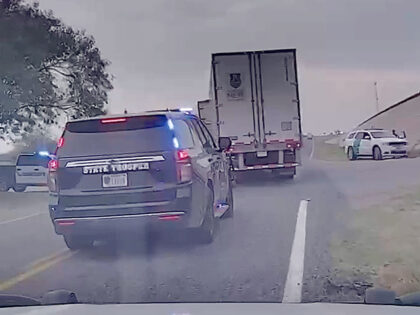
A Texas DPS trooper’s routine traffic stop near Laredo turned into a stark reminder that the southern border is less a line on a map than a revolving door for human smuggling. Twenty people—four of them children—were crammed into the sleeper cab of a commercial rig, a scene that plays out daily because federal policy has effectively deputized cartels as travel agents. The trooper didn’t need a warrant or a task force; he simply enforced existing traffic law, and the truth spilled out of the truck. That single enforcement action exposes how little control Washington actually exerts once a load crosses the river.
For the 2A community the lesson is straightforward: when the federal government abdicates its duty to secure the border, states and citizens are left holding the security tab. Texas has responded with its own troopers, National Guard rotations, and Operation Lone Star precisely because D.C. won’t. Those same state-level tools—armed officers, rapid interdiction, and the political will to use them—are the practical expression of the Second Amendment’s purpose: an armed citizenry and its elected representatives filling the vacuum left by a disarmed or distracted central authority. Every time a trooper finds another load of smuggled bodies, it underscores why Texans remain reluctant to surrender the tools that let them backstop a broken federal system.
The larger implication is that border chaos is not an immigration issue alone; it is a sovereignty issue that ripples into every debate over who ultimately keeps the peace. Cartels treat the Rio Grande like a toll road because they know enforcement is episodic and penalties are light. An armed, trained citizenry and state law-enforcement apparatus willing to act without waiting for Beltway permission is the only consistent deterrent on the ground. Until Washington decides to treat illegal entry as the national-security threat it is, stories like the Laredo traffic stop will keep arriving in Texas inboxes, each one another data point that the right to keep and bear arms is not theoretical—it is the last line when the first lines fail.


