

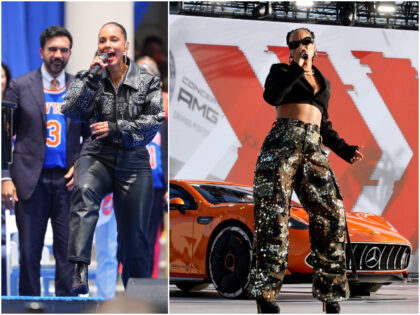
Alicia Keys’ tearful lament on America’s 250th birthday that women still lack “equal rights” lands with the same tinny ring as every other celebrity grievance that ignores the actual scoreboard. The 19th Amendment, the Equal Pay Act, Title IX, and decades of court rulings have already delivered legal parity on voting, education, employment, and property—yet Keys, worth an estimated $70 million, frames the nation’s founding charter as an ongoing oppression. The disconnect is glaring: the very constitutional order she dismisses is what protects her right to amass wealth, speak freely, and travel with armed security if she chooses.
For the 2A community the moment is instructive. When high-profile voices insist the founding document is irredeemably flawed, they rarely stop at abstract complaints; the next logical step is usually a call to “rethink” or restrict the tools that make that document enforceable. Every time a celebrity equates constitutional originalism with systemic bigotry, the practical result is more pressure on legislators to treat the Second Amendment as the next domino to fall. Gun owners have watched this pattern play out in states that first expanded “equity” rhetoric and then moved to magazine bans, red-flag laws, and permit-to-purchase schemes—all sold as modernizing an outdated framework.
The takeaway is straightforward: the same cultural script that dismisses 1776 as insufficient for women is already being used to portray 1791 as dangerous for everyone else. Defending the right to keep and bear arms therefore isn’t just about cartridges and capacity; it is about preserving the structural safeguard that prevents any single cultural moment—celebrity tears included—from rewriting the Bill of Rights by fiat.


