

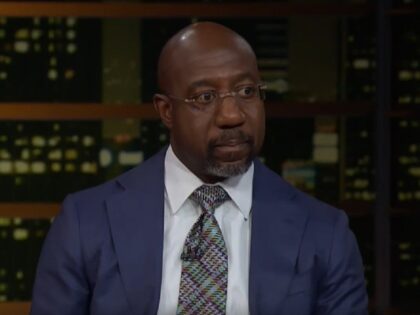
Sen. Raphael Warnock’s insistence that “everybody” must be held accountable for Hamas’s refusal to let Gazan civilians into its tunnel network is a textbook case of moral equivalence that should alarm anyone who values individual responsibility and the right to self-defense. By spreading blame across Israel, Hamas, and unnamed third parties, Warnock effectively shields the terrorist group that deliberately embeds its military infrastructure beneath hospitals, schools, and apartment blocks—tactics that mirror the human-shield strategies used by cartels and street gangs here at home. The practical result is the same: when aggressors are allowed to hide behind innocents, the cost of restoring order rises dramatically, and the people who actually started the fight escape the clearest condemnation.
For the 2A community this episode is a live-fire demonstration of why an armed citizenry matters. Hamas’s tunnel system was built with diverted humanitarian aid and protected by the very civilians it refused to shelter, proving once again that disarmament rhetoric—“just give up your guns and the government will protect you”—fails the moment the government is either absent or complicit. Law-abiding Israelis who retained the means and the legal right to defend their communities are the ones who ultimately had to respond when rockets rained down; the same principle applies to American gun owners who refuse to outsource their safety to institutions that sometimes prioritize optics over stopping predators. Warnock’s framing also reveals how quickly “common-sense” restrictions on magazines, semi-automatics, or carry rights can be repurposed to disarm the law-abiding while leaving criminals and terrorists untouched.
The deeper implication is that accountability cannot be collective when the aggressor’s entire strategy depends on blurring the line between combatant and non-combatant. Every time a politician equates the side that builds bomb shelters with the side that diverts concrete into attack tunnels, they erode the moral distinction that justifies armed self-defense in the first place. Gun owners who have watched similar language deployed against “assault weapons” or “high-capacity magazines” recognize the pattern: dilute responsibility, expand the circle of blame, and the practical effect is that only the already-compliant lose rights. The Warnock interview is therefore less about Gaza than about whether free people will continue to insist that those who initiate force—and those who enable it—bear primary responsibility, a principle that remains the bedrock of both just war and the Second Amendment.


