

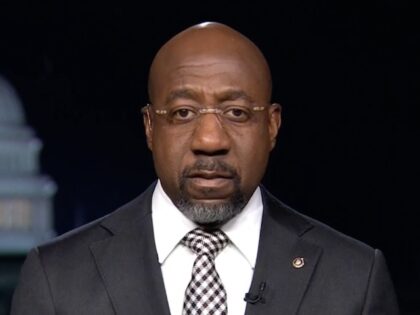
Sen. Raphael Warnock’s casual admission that court-packing and term limits remain live options for Democrats is less a policy trial balloon than a warning shot across the bow of every constitutional protection that currently rests on a 6-3 Court. By floating structural changes to the judiciary the moment the left loses a majority, Warnock telegraphs that the real target isn’t “balance” but the ability of an originalist bench to keep striking down gun-control experiments that lower courts once rubber-stamped. The 2A community has already seen what a single vacancy can do: the Bruen decision vaporized New York’s century-old discretionary-carry regime and is now rippling through assault-weapon and magazine-ban challenges nationwide; another vacancy engineered by legislative fiat would instantly reopen those cases and invite a new wave of restrictions that lower courts would be happy to uphold.
The deeper implication is that institutional norms are being treated as disposable whenever they obstruct progressive policy goals. Term limits and court expansion are marketed as “reforms,” yet both mechanisms would let transient congressional majorities reshape the Court’s composition faster than elections can correct course, effectively turning lifetime tenure into a political bargaining chip. For gun owners, that means the hard-won textual and historical standard established in Bruen could be diluted by justices selected for their willingness to defer to legislative “public safety” findings rather than the text of the Second Amendment. Once the precedent of resizing the Court is set, future Democratic Congresses would face little friction in adding two or three seats the next time a high-profile shooting prompts calls for “assault weapon” bans or red-flag laws that bypass due process.
In practical terms, the 2A community should treat Warnock’s comments as an early indicator that the legal terrain may shift again before the 2024 election cycle concludes. Grass-roots mobilization around judicial confirmations, state-level constitutional carry expansions, and support for originalist circuit judges will matter more than ever, because the alternative is a judiciary whose composition is dictated by whichever party is most willing to break norms to lock in policy victories that the Bill of Rights was designed to place beyond majority vote.


