

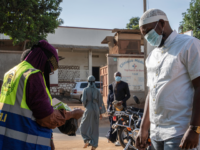
In the Democratic Republic of Congo, where armed militias routinely ambush health workers and seize medical supplies, the World Health Organization’s top official just admitted that Ebola contact tracing has become “nearly impossible.” Tedros Adhanom Ghebreyesus’s blunt assessment isn’t merely about logistics; it underscores a grim reality that when governments cannot—or will not—secure their own territory, even the most basic public-health functions collapse. For Second Amendment advocates, the lesson is immediate: the same forces that disarm civilians under the banner of “public safety” are the first to flee when real danger arrives, leaving ordinary people to fend for themselves against both disease and armed predators.
History shows that communities with ready access to effective firearms have repeatedly fared better during sudden breakdowns of order, whether during Ebola flare-ups in West Africa or cartel-driven chaos in Latin America. In Congo, villagers who might otherwise isolate the sick or guard treatment centers are instead forced to weigh the risk of being shot by rebels against the risk of infection. That calculus changes dramatically when citizens can lawfully keep and bear arms for self-defense; armed neighborhood watches have already proven capable of deterring both banditry and the looting of aid convoys. The WHO’s admission therefore doubles as an unintended endorsement of the right to keep and bear arms: when the state’s monopoly on force evaporates, only an armed populace can maintain the minimal security required for any coordinated response to a lethal outbreak.
The broader implication for American gun owners is that global health bureaucracies rarely acknowledge how insecurity and civilian disarmament intersect. Tedros’s statement should prompt renewed scrutiny of domestic policies that treat defensive firearms as the problem rather than a proven layer of resilience. In an era when pandemics, civil unrest, and supply-chain shocks can arrive with little warning, the ability of free citizens to protect their families and communities remains the most dependable backstop against both bullets and bacilli.


