

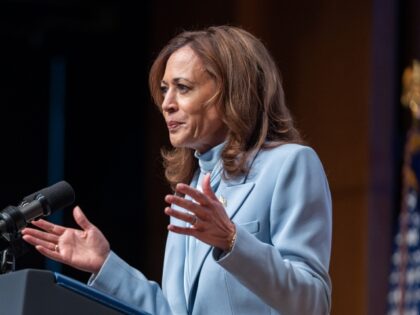
Kamala Harris’s latest linguistic crusade—declaring that “hope” needs to be turned into a verb—lands with the same thud as her previous policy pronouncements: it ignores what already exists while pretending to invent something new. English already contains “to hope,” a perfectly serviceable verb that millions use daily without needing a campaign slogan or a teleprompter to remind them. The episode is less about grammar and more about a familiar pattern: progressive rhetoric that dresses up the obvious as revolutionary, then expects applause for the discovery. For gun owners who have spent years watching the same rhetorical sleight-of-hand applied to “assault weapons,” “red flag laws,” and “common-sense safety,” the moment feels like déjà vu—another elite voice announcing a solution to a problem that only exists in their own framing.
That disconnect matters to the 2A community because language is the first battlefield in every rights debate. When politicians treat words as infinitely malleable, they can redefine “infringe,” “well-regulated,” or even “shall not” to suit the next restriction. Harris’s willingness to rewrite basic grammar on national television signals the same comfort with redefining constitutional text that produced magazine bans, pistol braces, and “ghost gun” rules. The 2A community has learned that once officials claim the power to change the meaning of everyday terms, the next step is changing the meaning of legal ones—often without new legislation, simply by bureaucratic reinterpretation. Hope may already be a verb, but so is “shall,” and both deserve to keep the meanings the Founders gave them rather than the ones a future administration decides to assign.
The larger implication is that voters who value individual liberty cannot afford to treat such verbal missteps as harmless quirks. They reveal a worldview in which rights are grants from government rather than pre-existing conditions the government is bound to respect. When the same figures who stumble over basic English also control agencies that write rules on braces, bump stocks, and background-check expansions, the stakes stop being academic. The 2A community’s response has been consistent: document the overreach, litigate the redefinitions, and keep the plain meaning of both the Constitution and the dictionary intact.


