

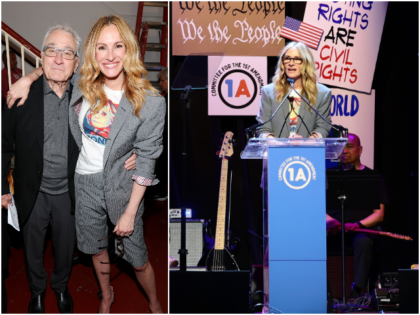
Julia Roberts stepping onto Jane Fonda’s stage to celebrate Renee Goode—an activist whose record includes direct action against federal immigration enforcement—signals more than celebrity virtue-signaling; it underscores how cultural elites continue to romanticize confrontations with lawful authority. By framing resistance to ICE as heroic, the event recycles the same “by any means necessary” logic that has historically justified attacks on federal officers, courthouses, and now increasingly on local law-enforcement partners. For the 2A community this matters because the same rhetoric that delegitimizes immigration officers is already being aimed at armed citizens and the agencies that train them; once the principle is accepted that federal enforcement is inherently illegitimate, the next logical target is the individual right to keep and bear arms that underpins every other constitutional protection.
The optics are equally instructive. A-list actresses and aging activists still command media oxygen, yet their audience is shrinking to coastal enclaves where lawful gun ownership is already treated as suspect. That narrowing base explains why the same circles that lionize “Rise Up” tactics simultaneously push magazine bans, red-flag laws, and “sensitive place” restrictions—measures that would leave ordinary citizens disarmed precisely when political violence is being mainstreamed as protest. The 2A takeaway is straightforward: cultural normalization of anti-enforcement radicalism accelerates the policy pipeline that turns yesterday’s street action into tomorrow’s statute, making vigilance at the ballot box and in the culture war every bit as critical as range time.


