

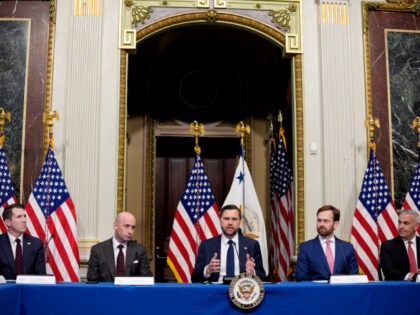
Vice President JD Vance’s roundtable with state attorneys general signals a deliberate pivot toward cooperative federalism on fraud enforcement, and the 2A community should pay close attention. By enlisting state-level prosecutors rather than relying solely on distant federal agencies, the administration is creating enforcement pipelines that can move faster and with greater local accountability—exactly the kind of structure that has historically protected law-abiding gun owners from overbroad rules cooked up in Washington. When fraud schemes involving background-check databases, prohibited-person lists, or misused federal grant money are rooted out at the state level, the risk of erroneous denials or politicized “studies” shrinks, preserving both public safety resources and the rights of citizens who clear every legal hurdle.
The timing matters. With several states already experimenting with real-time data-sharing between courts and the NICS system, tighter anti-fraud protocols could reduce the lag that sometimes leaves prohibited individuals on the street or, conversely, flags lawful purchasers because of clerical errors. For the firearms industry, cleaner data means fewer compliance headaches for FFLs and less ammunition for lawsuits that paint the entire gun-owning public as suspect. If the task force’s model spreads, expect state AGs to scrutinize not only garden-variety benefit fraud but also any attempt to launder foreign funds into domestic gun-control initiatives—an angle that could blunt the effectiveness of well-funded astroturf campaigns.
Ultimately, this is less about headline-grabbing arrests and more about hardening the administrative backbone that touches every lawful transfer. A fraud-free system is a rights-respecting system; by treating fraud as a bipartisan governance failure rather than a culture-war wedge, Vance’s approach gives the 2A community a practical lever to demand accuracy and transparency instead of simply bracing for the next regulatory surprise.


