

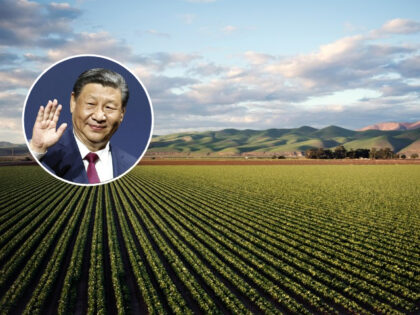
President Trump’s instinct to protect American soil from foreign ownership while refusing to handcuff U.S. farmers is exactly the kind of nuanced realism that Second Amendment supporters instinctively understand. When the federal government draws a bright line between “national security” and “economic freedom,” it mirrors the same principle that keeps the right to keep and bear arms from being turned into a privilege doled out by bureaucrats. Rollins’ comments reveal an administration that sees Chinese land purchases as a strategic vulnerability—think dual-use infrastructure, water rights, and proximity to military bases—yet refuses to punish the very people who feed the nation. That balance matters to gun owners because the same logic can be weaponized against them: if Washington can decide that a farmer’s sale threatens security, it can just as easily decide that an ammunition purchase or a magazine capacity threatens it too.
The deeper implication is that property rights and gun rights are two sides of the same constitutional coin. Both rest on the idea that individuals—not the state—decide how to use what they lawfully own. When foreign adversaries gobble up acreage near training ranges or missile fields, they gain physical leverage that no amount of later regulation can fully unwind. The same is true when domestic agencies nibble away at the right to bear arms through registration schemes, “safe storage” rules, or insurance mandates; each restriction starts small and metastasizes. Trump’s stance signals he grasps this linkage: he will use targeted tools—CFIUS reviews, state-level deed restrictions, perhaps even eminent-domain countermeasures—without resorting to the blunt instrument of a nationwide ban that would crater land values and punish the very citizens he claims to defend.
For the 2A community, the lesson is straightforward: vigilance on farmland policy is not a distraction from gun rights; it is an early-warning system. Every precedent set in the name of national security, whether it involves soil or firearms, will be cited the next time a city council or federal agency wants to limit magazine capacity, impose universal background checks, or require “red flag” seizures. By insisting that security measures remain narrowly tailored and economically tolerable, the administration is modeling the same discipline the gun-rights movement has demanded for decades. If that discipline holds, the result is stronger borders above ground and stronger protections for the individual below it—exactly the outcome a nation of armed, self-reliant citizens should expect.


