

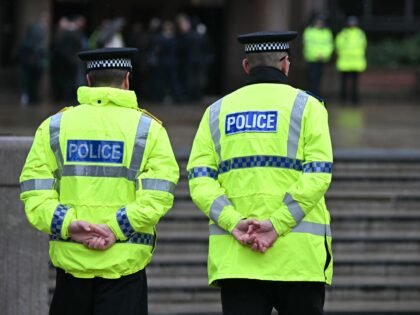
The Metropolitan Police’s quiet admission that they possess zero evidence against anyone in the supposed Suffolk “far-right plot” is less a vindication than a window into how modern counter-terrorism now treats political speech as presumptive violence. What began as breathless headlines about an imminent attack on an Islamic event has collapsed into the familiar pattern: a tip, a raid, wall-to-wall coverage, then a terse statement that nothing prosecutable exists. For Americans who still prize the Second Amendment, the episode is a cautionary tale about what happens when a society decides that the mere possession of dissenting views—or, in many European jurisdictions, the mere possession of legal firearms—can be reframed as a national-security threat. Once that precedent is set, the right to keep and bear arms is not merely regulated; it is redefined as evidence of dangerous intent.
The deeper implication is that the same institutional reflexes now operating in the UK are already visible in U.S. policy debates. When federal agencies and legacy media treat lawful gun ownership, participation in pro-2A rallies, or even private conversations about self-defense as potential indicators of “extremism,” they are importing the same evidentiary standard that just produced a non-case in Suffolk. The result is a chilling effect: citizens self-censor, training ranges see fewer new shooters, and the cultural space for responsible armed citizenship shrinks. Meanwhile, actual threats—whether from radical Islamist networks or street-level disorder—continue to receive uneven scrutiny, revealing that the priority is often narrative control rather than public safety.
For the 2A community the lesson is straightforward: every erosion of due process abroad is marketed as a model for domestic policy at home. The Suffolk non-plot demonstrates how quickly “no evidence” can be spun into “we acted on the best information available,” preserving institutional credibility while the accused remain under a cloud. Maintaining the constitutional firewall that separates political disagreement from criminal suspicion is therefore not an abstract principle; it is the practical precondition for keeping and bearing arms without first having to prove one is not a terrorist.


