

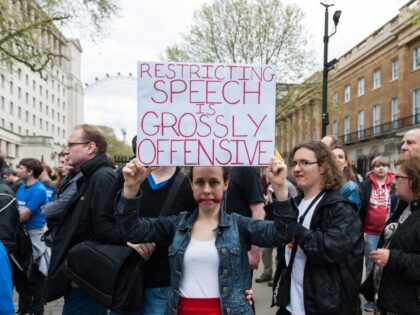
Britain’s new “Online Operations” unit is quietly turning social-media posts into arrest warrants, and the numbers are climbing fast. More than a hundred anti-immigration comments have already been handed to local forces for investigation, a move that shows how quickly speech can be criminalized when governments decide certain opinions are too dangerous to tolerate. The unit’s mandate is framed as public-safety work, yet its targets are almost exclusively native Britons voicing concern over rapid demographic change—exactly the kind of viewpoint that, in the U.S., would be protected by the First Amendment and, by extension, the culture that keeps the Second Amendment viable.
For American gun owners the lesson is straightforward: the same political class that wants to disarm citizens also wants to control what those citizens are allowed to say about the policies that endanger them. When speech is redefined as “hate,” the next logical step is to argue that people who hold such opinions are too “extreme” to be trusted with firearms. We have already seen British-style language adopted by U.S. officials who label standard magazines “weapons of war” or call lawful carriers “domestic terrorists.” If that rhetoric becomes law, the same digital dragnet now operating in the UK could be repurposed here to flag gun owners for enhanced scrutiny or outright prohibition.
The practical takeaway is that 2A advocacy cannot be siloed from free-speech defense. Every platform policy, every “disinformation” task force, and every new red-flag proposal must be viewed as part of a single continuum aimed at neutralizing the armed citizen. The British example proves the slope is not slippery—it is a well-greased chute. Staying off it requires constant push-back against speech controls, because once the words are criminalized, the guns are sure to follow.


