

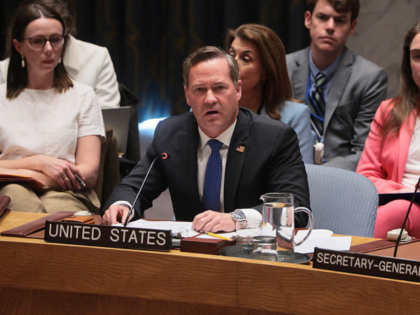
U.S. Ambassador Mike Waltz’s blunt takedown at the United Nations laid bare the Castro regime’s priorities: the ruling family’s private jet still finds aviation fuel while ordinary Cubans wait in bread lines and blackouts. That contrast isn’t just a talking point; it’s a textbook demonstration of how centralized power and the suppression of individual rights produce scarcity for everyone except the political class. For Second Amendment advocates, the lesson is immediate—when a government can decide who eats and who flies, it can just as easily decide who keeps and bears arms. Cuba’s near-total civilian disarmament didn’t create safety or prosperity; it created a population unable to resist the very kleptocracy now being called out on the world stage.
The so-called “embargo” debate at Turtle Bay is really a referendum on whether free people should subsidize their own disarmament by propping up a regime that treats firearms ownership as a capital offense. Waltz’s remarks underscore that the Castro model—state monopoly on violence paired with state monopoly on the economy—remains the polar opposite of the American founding principle that an armed citizenry is the ultimate check on tyranny. Every time the regime blames Washington for its failures, it inadvertently highlights why the right to keep and bear arms matters: without it, citizens become dependents rather than sovereigns, and the political elite’s jets keep flying while the country starves.
For the 2A community, the Cuba story is a live-action warning label. It shows what happens when a nation trades the individual right of self-defense for the promise of collective security administered by ideologues. The result is predictable: chronic shortages, elite privilege, and zero recourse when the lights go out. Waltz’s intervention at the U.N. didn’t just embarrass Havana; it reminded Americans why our constitutional architecture still places the ultimate power—not in embassies or embargo votes—but in the hands of a free and armed people.


