

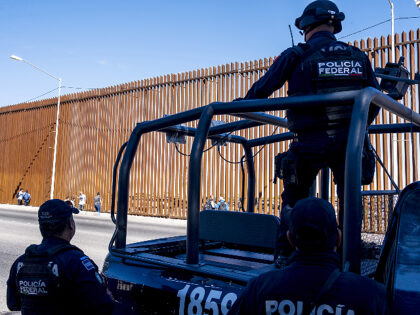
The U.S. Consulate’s alert for Mexicali is another reminder that Mexico’s cartel war is no longer confined to remote mountain ranges or the southern border; it has spilled into the very tourist corridors that once felt insulated from the violence. When the State Department refuses to name the specific threat, it is usually because the intelligence points to targeted kidnappings or extortion schemes aimed at U.S. citizens who can pay large ransoms—tactics that have become a reliable revenue stream for groups like the Sinaloa and Jalisco New Generation cartels. For the 2A community, the takeaway is straightforward: the same federal government that lectures Americans about “assault weapons” cannot guarantee their safety once they step outside the United States, yet it simultaneously works to restrict the very tools citizens might rely on if they find themselves in the crossfire of cartel activity.
What makes the alert especially relevant to gun owners is the contrast between Mexican and American legal realities. South of the border, civilians are effectively disarmed by a single, heavily restricted permit process administered by the military; north of the border, permitless carry and constitutional carry states give travelers a fighting chance should violence erupt. The cartels understand this asymmetry perfectly—they operate safe houses and smuggling corridors inside U.S. cities precisely because they know armed resistance is statistically higher here. The Mexicali warning therefore functions as an unintended endorsement of the right to keep and bear arms: it tacitly admits that once you leave the protection of American soil and American law, your safety depends on factors largely outside government control.
For travelers who still plan to cross, situational awareness and legal preparedness matter more than ever. That means knowing the nearest U.S. consulate, monitoring local Spanish-language radio for sudden roadblocks, and—if legally possible—having a viable self-defense plan on the U.S. side of the line before departure. The consulate’s alert is not an overreaction; it is an admission that Mexico’s gun-control model has failed its citizens and cannot protect ours. In that light, the 2A community’s long-standing argument—that an armed populace is the most practical deterrent to predatory violence—receives yet another real-world data point, written this time in the cautious language of a diplomatic cable.


