

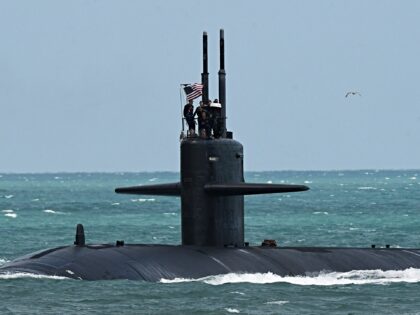
The U.S. decision to transfer three in-service Virginia-class boats to Australia marks a sharp acceleration of the AUKUS timeline, effectively handing Canberra a ready-made nuclear strike capability years ahead of the original “one new, two used” schedule. By pulling boats already in the fleet rather than waiting for new construction, Washington is signaling that strategic deterrence in the Indo-Pacific now outweighs the peacetime luxury of keeping every hull stateside—an unmistakable reminder that nuclear-powered submarines are sovereign instruments of national power, not consumer goods subject to civilian oversight. For the 2A community this is more than distant geopolitics; it underscores that the same constitutional logic protecting an individual’s right to keep and bear arms also safeguards a nation’s right to field the most advanced weaponry without begging permission from international bureaucracies or domestic gun-control lobbies.
Critics who claim civilian ownership of semiautomatic rifles somehow threatens “public safety” should be forced to confront the reality that liberal democracies are openly racing to arm allies with 40-knot, stealthy, nuclear-tipped predators whose destructive potential dwarfs anything in private hands. The move also exposes the hypocrisy of arms-control advocates who simultaneously push magazine bans at home while green-lighting the export of boats carrying enough torpedoes and cruise missiles to level a small city. In practical terms, the Virginia transfer compresses Australia’s learning curve, guarantees a continuous U.S. rotational presence in the region, and sets a precedent that responsible, English-speaking allies can be trusted with sensitive nuclear technology—an argument that mirrors the pro-2A case for shall-issue carry and constitutional carry: vetted citizens, not government gatekeepers, are the safest stewards of decisive force.
Longer term, the deal quietly validates the view that technological superiority and individual or national self-reliance remain the surest guarantors of liberty. Just as a law-abiding American’s AR-15 is dismissed as “military-grade” by the same voices now celebrating Australia’s nuclear fleet, the Virginia transfer proves that the line between “too powerful for civilians” and “essential for allies” is drawn by politics, not physics. The 2A community should watch this precedent closely; every time a Western democracy demonstrates that free people can responsibly wield overwhelming force, it undercuts the narrative that only the state can be trusted with serious arms.


