

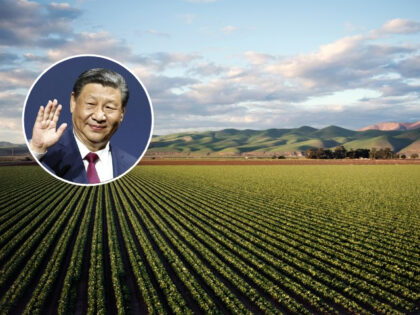
Texas Agriculture Commissioner Sid Miller’s call for other states to get “hard-nosed” on Chinese farmland purchases isn’t just about soybeans and real estate—it’s a direct shot across the bow of the same foreign adversaries who are quietly arming themselves with American soil while our own citizens fight to keep their Second Amendment rights intact. Miller’s Texas model, which blocks entities tied to the Chinese Communist Party from snapping up prime agricultural land, exposes a glaring national vulnerability: when hostile nations control the ground beneath our feet, they control the food supply, the logistics hubs, and ultimately the leverage they need to pressure U.S. policy on everything from trade to gun rights. The 2A community has long warned that economic dependence on China weakens our ability to stand firm on constitutional freedoms; now the farmland issue proves the point in real time, showing how Beijing’s creeping influence could one day translate into supply-chain coercion that makes it harder for American gun owners to stockpile ammunition or maintain rural ranges.
What makes Miller’s stance especially potent is its unapologetic state-level defiance at a time when federal signals on China have softened. By treating Chinese-linked buyers as national-security risks rather than ordinary investors, Texas is demonstrating that sovereignty still matters more than short-term profit, a principle the firearms community instinctively understands because we’ve spent decades battling federal overreach that treats law-abiding gun owners as the threat instead of actual foreign adversaries. If other states follow suit, the ripple effects could strengthen domestic manufacturing of firearms components, protect rural economies that form the backbone of shooting sports, and reduce the risk of strategic land grabs near military installations or critical infrastructure—exactly the kind of proactive defense the 2A world has advocated for years.
The broader implication is that Second Amendment advocates should treat farmland security as a natural extension of their own fight.


