

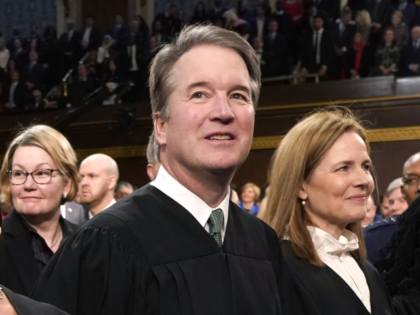
President Trump’s decision to revive tariffs on sixty nations by leaning on the very procedural pathway Justice Kavanaugh sketched in his February dissent is more than trade theater—it is a master class in using the Court’s own language to reopen policy doors that lower courts had tried to nail shut. By framing the new duties as emergency measures under statutes Kavanaugh explicitly left available, the administration converts what looked like a judicial defeat into a blueprint for future executive action. For the firearms community, the lesson is immediate: when the Supreme Court signals which statutory “escape hatches” remain viable, a disciplined White House can exploit them to blunt regulatory end-runs that would otherwise strangle domestic manufacturing.
The ripple effects on Second-Amendment industries are straightforward but under-appreciated. Steel and aluminum tariffs raise the cost of imported components used in frames, slides, and optics mounts, nudging buyers toward U.S.-made alternatives and giving domestic producers breathing room they have not enjoyed since the last round of Section 232 duties. At the same time, retaliatory tariffs from trading partners threaten export markets for American optics and ammunition makers, forcing those companies to accelerate stateside capacity or diversify into allied-nation supply chains less exposed to political risk. The net result is a slow but measurable re-shoring of the small-arms ecosystem—exactly the kind of structural shift that strengthens long-term resilience against both foreign shocks and domestic attempts to regulate via the commerce power.
Strategically, the episode underscores a broader truth: judicial opinions are not merely verdicts; they are road maps. By reading Kavanaugh’s dissent as an invitation rather than a eulogy, the administration has shown how a single paragraph can be weaponized into an entire trade architecture. For 2A advocates, the takeaway is to treat every concurrence and dissent as an early-warning system—because the next restriction on braces, pistol grips, or imported receivers may be vulnerable to the same technique if the right statutory language is left intact.


