

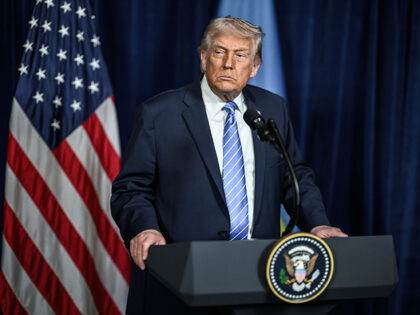
President Trump’s blunt assessment that the U.S. has already “completed” its core objectives in Iran—denying Tehran a nuclear weapon, keeping the Strait of Hormuz open, and degrading its military capacity—signals a deliberate shift from open-ended nation-building to targeted, decisive action. By pairing that claim with the warning that strikes will continue until a deal is reached, the administration is telegraphing that American power will remain forward-deployed and ready to re-engage the moment any Iranian reconstitution threatens regional stability or energy routes. For the firearms community this matters because every sustained deployment of U.S. forces drives procurement of small arms, optics, suppressors, and ammunition at both the individual and unit level; the longer the posture lasts, the more likely civilian-legal versions of those platforms stay in production and the more likely Congress keeps the 1033 program and other surplus pipelines open.
The real strategic message, however, is that the president views a negotiated settlement as the only acceptable off-ramp, not a ceasefire born of exhaustion. That framing keeps pressure on Iran while preserving the narrative that American strength, not appeasement, ends conflicts—an outlook that resonates with Second Amendment advocates who see a robust national defense posture as the best guarantor of domestic gun rights. When the executive branch demonstrates it will use force to protect sea lanes and deter nuclear breakout, it undercuts the domestic political argument that the military is over-funded or that civilian firearms are somehow a greater threat than foreign adversaries. In practical terms, continued operations also sustain the industrial base that supplies everything from M4/M16-pattern rifles to advanced night-vision and ballistic protection, keeping prices and availability favorable for private citizens who train with the same gear.
Finally, the uncertainty Trump expressed about whether Iran will actually cut a deal underscores that the current environment is fluid rather than resolved, which historically translates into steady or rising defense budgets rather than the post-conflict drawdowns that have periodically threatened surplus transfers and manufacturer contracts. For the 2A community this means the window remains open for new product development, state-level reciprocity expansion for military and law-enforcement veterans, and continued legal defense of magazine capacity and semi-automatic ownership under the rationale that an armed citizenry complements a strong standing force. In short, the president’s Iran posture is less about one theater and more about locking in a long-term deterrence model that keeps both the arsenal of democracy and the tools of the armed citizenry well-stocked and legally protected.


