

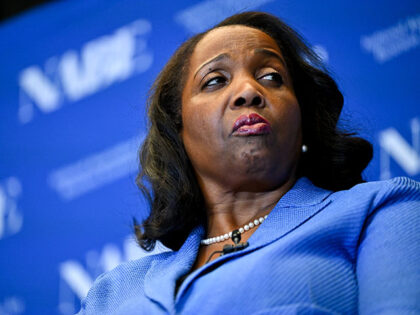
President Trump’s renewed vow to oust Federal Reserve Governor Lisa Cook after the Supreme Court’s temporary stay is more than Beltway theater—it is a direct shot across the bow of an institution whose monetary decisions ripple straight into the price of everything from ammunition to AR-platform components. When the Fed keeps rates artificially low or floods the system with liquidity, real purchasing power erodes; law-abiding gun owners feel it first at the gun counter and reloading bench, where a 30-round magazine or a case of 5.56 suddenly costs what a weekend’s range time used to run. Trump’s insistence that he can install officials who prioritize sound money is therefore a de-facto defense of the Second Amendment’s practical exercise, because inflation is the stealth tax that prices ordinary citizens out of the very tools the Constitution protects.
Cook’s tenure has coincided with the post-2020 monetary experiment that supercharged asset bubbles while eroding the dollar’s value at roughly twice the rate the Fed publicly admits. For the firearms community that lived through the 2020-2022 panic buying, those policies translated into empty shelves, $1-plus primers, and background-check delays measured in weeks rather than days. By signaling he will not tolerate governors who treat the Fed’s dual mandate as optional, Trump is telegraphing that future appointments will be vetted for fiscal restraint—an approach that historically correlates with steadier prices on durable goods, including the firearms and accessories that millions of Americans rely on for self-defense and recreation.
The deeper implication is constitutional: if the executive truly lacks removal power over supposedly “independent” agencies, then an entire layer of economic governance sits beyond democratic accountability. That insulation has repeatedly produced policies hostile to the right to keep and bear arms—whether through Operation Choke Point-style banking pressure or regulatory end-runs that treat ammunition as a financial risk. Trump’s fight to reassert appointment-and-removal authority is therefore a structural safeguard for the 2A, ensuring that the people who set the value of the dollar cannot indefinitely insulate themselves from the voters whose rights depend on that dollar retaining purchasing power.


