

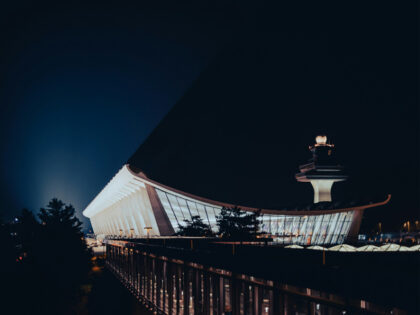
President Trump’s announcement of a major Dulles renovation is more than a bricks-and-mortar story; it’s a signal that the next four years will be spent rebuilding the physical and regulatory infrastructure that quietly shapes how millions of Americans exercise their right to keep and bear arms. Dulles is the gateway for countless international travelers who return with firearms, parts kits, and ammunition, and it is also the hub where TSA and CBP policies are stress-tested in real time. By promising to modernize terminals, streamline passenger flow, and upgrade technology, the administration is effectively promising to reduce the choke points where lawful travelers have historically been delayed, disarmed, or even prosecuted for paperwork errors. For the 2A community, that translates into fewer “gotcha” moments at the border and a tangible reduction in the soft costs of travel with firearms.
The timing is equally telling. With the Supreme Court’s Bruen decision still rippling through lower courts and several states racing to enact permitless-carry regimes, the White House is positioning itself as the pro-Second-Amendment counterweight to blue-state attorneys general who would rather see airport gun cases become federal showcases. A renovated Dulles equipped with clearer signage, dedicated lanes for returning armed travelers, and updated digital declaration systems could serve as a national template—proof that efficient infrastructure and constitutional rights are not mutually exclusive. Industry analysts are already watching whether the FAA and TSA will be directed to align their inspection protocols with the new “shall-issue” landscape, potentially easing the burden on FFLs who ship firearms to and from shows like SHOT Show or regional expos.
Finally, the Dulles project underscores a broader truth: the right to bear arms is exercised in physical spaces that government controls. Whether it is an airport checkpoint, a national park trailhead, or a post office parking lot, the 2A community’s daily experience is shaped by concrete, signage, and policy more often than by statute alone. If the renovation delivers on its promise of speed and clarity, it will quietly expand the practical reach of the Second Amendment for travelers who have long navigated a patchwork of conflicting rules. If it stalls, the same choke points will continue to serve as leverage for those who prefer to disarm citizens one inconvenient regulation at a time. Either way, the 2A community now has a new yardstick—runway length and terminal throughput—by which to measure whether the right to travel armed is being protected in practice, not just in principle.


