

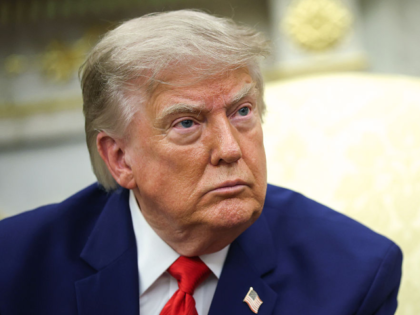
President Trump’s blunt warning that America is “not finished at all” with Iran—and that a strike on the regime’s hardened Pickaxe Mountain nuclear bunker is coming “pretty soon”—is more than saber-rattling; it is a reminder that the same administration that restored the phrase “peace through strength” is once again willing to project power when diplomacy stalls. The Pickaxe Mountain facility, buried deep beneath granite and ringed with air-defense batteries, represents the kind of target set that demands precision munitions, real-time intelligence, and the political will to use them. For the firearms community, the message is unmistakable: the same political forces that once tried to paint the Second Amendment as an anachronism are now confronted by a world where deterrence still rests on credible force, and credible force still rests on an armed citizenry that understands why rights exist in the first place.
The timing is no accident. With the 2024 election cycle looming and Iran’s proxies testing U.S. resolve from the Red Sea to the Levant, Trump’s rhetoric signals that the next round of escalation will not be met with another round of sanctions theater. That posture has downstream effects on domestic policy. Every time the national conversation turns to hard power—whether it is bunker-busting bombs or the rifles citizens keep at home—the gun-control lobby’s talking points about “assault weapons” and “militias” lose their emotional grip. Law-abiding owners who train with the same platforms used by special-operations units are reminded that the right to keep and bear arms is not a hobby; it is the constitutional backstop that keeps government honest when foreign adversaries calculate American weakness.
For the 2A community, the Pickaxe Mountain threat is therefore both a foreign-policy headline and a domestic-policy teachable moment. It underscores why magazine-capacity bans, pistol braces, and “ghost gun” rules are not merely academic debates; they are attempts to chip away at the very tools citizens would need if the unthinkable ever arrived on American soil. Trump’s willingness to name the target and set the timeline tells adversaries—and domestic critics—that the United States still prizes strength over slogans. The firearms community’s job is to ensure that strength remains distributed, not centralized, so that peace through strength begins at home with an armed, informed populace.


