

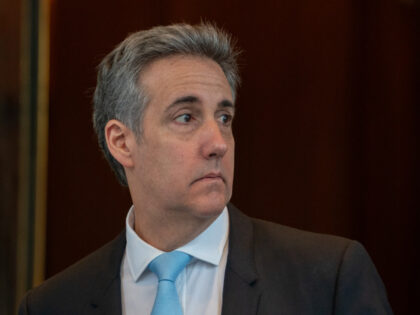
The announcement that President Trump will sit down with Michael Cohen for a recorded interview marks a striking turn in one of the most public political feuds of the decade. Cohen, once the president’s fiercely loyal “fixer,” has spent years positioning himself as the ultimate insider-turned-whistleblower, testifying before Congress and authoring a tell-all book that painted Trump as both erratic and legally vulnerable. Yet the decision to grant Cohen this platform suggests Trump is either confident enough in his own narrative to confront the accusations head-on or calculating that the spectacle itself will dominate headlines and drown out whatever Cohen might say. For the firearms community, the optics matter: any interview that keeps Trump in the news cycle also keeps the contrast between his record—Supreme Court appointments that delivered Bruen, bump-stock litigation setbacks, and repeated promises to protect “your Second Amendment”—and the Biden-era regulatory surge front and center.
What makes the moment especially relevant to gun owners is the subtext of legal exposure. Cohen’s past cooperation with federal prosecutors and his public calls for Trump’s indictment have fueled lawfare narratives that many 2A advocates see as a dress rehearsal for targeting lawful firearm owners through novel legal theories and regulatory reinterpretation. If Trump uses the interview to frame the Cohen saga as politically motivated persecution, it reinforces the broader argument that the same institutional machinery could be turned against gun shops, FFLs, and individual carriers under the guise of “public safety.” Conversely, if Cohen lands any rhetorical blows, it risks handing fresh ammunition to lawmakers already pushing magazine bans, red-flag expansions, and enhanced ATF tracing rules. Either outcome keeps the Overton window fixed on the weaponization of government institutions—an issue that resonates far beyond the Beltway and straight into the gun safe.
Ultimately, the interview is less about reconciliation than about narrative control in an election cycle where the right to keep and bear arms remains a defining fault line. Trump’s willingness to face his former fixer live underscores a campaign strategy built on projecting resilience against lawfare, while Cohen’s participation offers Democrats a last-ditch vehicle to re-litigate old allegations. For the 2A community, the takeaway is straightforward: every headline that keeps Trump versus the administrative state in the news also keeps the stakes of the next Supreme Court appointments, ATF rulemaking, and congressional majorities in sharp relief. In short, the Cohen spectacle is another reminder that the culture war over guns is inseparable from the larger battle over who wields the levers of federal power.


