

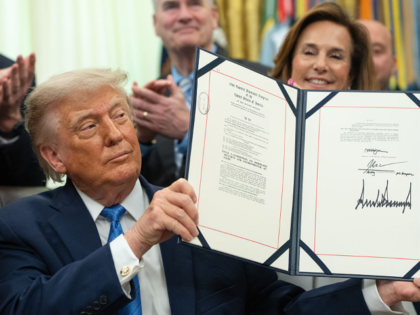
In a move that underscores the administration’s commitment to border security and domestic stability, President Trump’s signing of the Secure America Act ensures the Department of Homeland Security will remain fully operational through the remainder of his term. For the firearms community, this isn’t just another funding bill—it’s a quiet but meaningful reinforcement of the infrastructure that protects the legal gun trade from the chaos of open borders and transnational crime. With Customs and Border Protection, Immigration and Customs Enforcement, and the Transportation Security Administration all receiving sustained resources, the law helps keep illegal firearms, cartel smuggling routes, and unvetted entrants in check—factors that directly influence public safety arguments used by anti-2A activists.
Beyond the immediate security benefits, the legislation signals that the White House intends to maintain a hard line on enforcement rather than allowing funding lapses to become leverage for stricter gun-control riders. That continuity matters to manufacturers, FFLs, and everyday carriers who have watched past shutdown threats or continuing-resolution fights turn into opportunities for last-minute magazine bans or enhanced ATF reporting requirements. By locking in DHS funding now, the administration reduces the surface area for surprise legislative attacks and keeps regulatory agencies focused on their core missions instead of furlough planning.
For Second Amendment advocates, the real takeaway is strategic: stable homeland-security funding pairs with the administration’s broader deregulatory posture on firearms to create a policy environment less hospitable to new restrictions. It also highlights how border and port security intersect with the lawful exercise of gun rights—every intercepted straw purchase or stopped illegal shipment is one less data point for those pushing “gun violence” narratives. In short, the Secure America Act isn’t a gun bill, but its downstream effects on crime, smuggling, and agency readiness make it a quiet win for those who view armed self-defense as inseparable from national sovereignty.


