

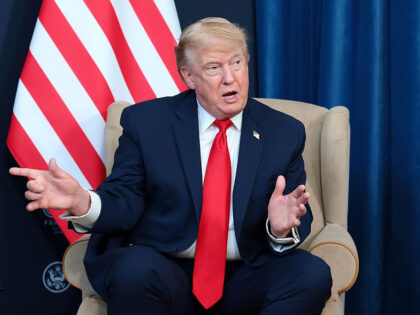
President Trump’s blunt call for Russia to cut a deal on Ukraine now that the Iran nuclear standoff has been pushed aside signals a deliberate pivot in U.S. foreign policy—one that carries direct consequences for American gun owners. By treating the Ukraine conflict as the next item on a crowded docket rather than an open-ended commitment, the administration is telegraphing that it will not let European security entanglements drain the defense budget or justify new rounds of gun-control measures dressed up as “national security.” The 2A community has watched administrations of both parties use overseas crises to expand background-check databases, restrict imports, and float ammunition taxes; Trump’s focus on negotiated settlements instead of blank-check aid suggests those avenues for incremental disarmament will stay closed.
At the same time, the rhetoric underscores a broader strategic recalibration that favors strength through deterrence over prolonged proxy fights. A Russia-Ukraine settlement reached under American pressure would likely reduce the flow of advanced Western weapons systems into Eastern Europe, easing pressure on domestic production lines and freeing capacity for civilian firearms and ammunition manufacturing. More importantly, it reinforces the principle that peace is achieved by projecting credible force rather than by endless foreign aid packages—an outlook that aligns with the view that an armed citizenry at home is the ultimate guarantor of liberty, not expeditionary adventures abroad. For Second Amendment advocates, the takeaway is clear: when the commander-in-chief prioritizes deal-making over mission creep, the domestic right to keep and bear arms faces fewer contrived threats dressed up as international obligations.


