

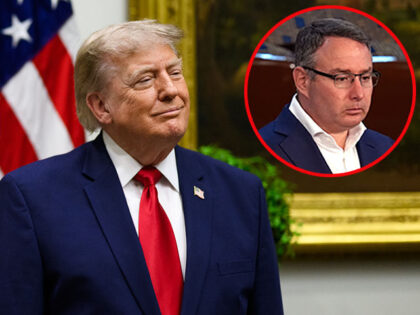
Trump’s gleeful reaction to Alexander Vindman’s defeat is more than partisan score-settling; it’s a reminder that the same national-security apparatus that once tried to weaponize a phone call against a sitting president is still embedded in the permanent bureaucracy. Vindman’s brief, high-profile turn as an impeachment witness was sold to the public as a profile in courage, yet the episode also exposed how quickly career officials can be elevated into political actors when their testimony aligns with the preferred narrative of the administrative state. For Second Amendment supporters, the lesson is straightforward: the same institutional reflexes that turned a policy disagreement into an impeachment inquiry can just as easily be aimed at the right to keep and bear arms whenever a future administration decides the Second Amendment is an inconvenient obstacle.
Angie Nixon’s victory, by contrast, hands the Florida legislature a self-described democratic socialist whose platform includes “common-sense gun safety” measures that have historically meant registration schemes, magazine bans, and red-flag laws with minimal due process. While Nixon’s win was cheered by national Democrats as proof of suburban realignment, Florida’s gun owners now face a vocal opponent inside the statehouse who will likely align with any future federal push to import Australian-style buybacks or to treat private transfers as “loopholes.” The irony is rich: Trump’s preferred outcome removed one Beltway adversary only to install another at the state level, underscoring how the 2A community must track threats from both entrenched federal agencies and newly empowered local legislators.
The larger takeaway is that electoral politics remains the most reliable pressure valve for preserving constitutional rights. Vindman’s loss signals that voters can still punish officials who treat dissent as disloyalty, but Nixon’s gain shows that single-issue vigilance cannot be relaxed even in ruby-red states. Gun owners who treat every race as consequential will be better positioned to blunt magazine bans in Tallahassee and to keep ATF rulemaking in check in Washington—two fronts where the right to bear arms is perpetually on the docket.


