

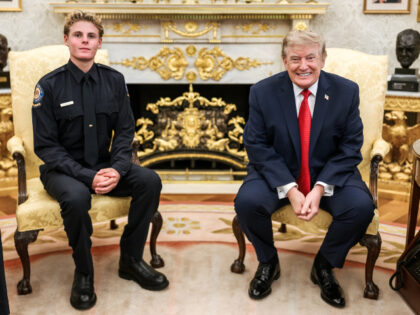
When President Trump shook Ryder Williams’ hand in the Oval Office, the moment wasn’t just about a lifeguard’s split-second courage; it was a living reminder that individual responsibility still trumps bureaucratic safety nets. Williams didn’t wait for a committee-approved rescue plan or a government grant—he sprinted into violent surf with nothing but training, instinct, and the moral clarity that every life is worth the risk. That same clarity animates the 2A community: the belief that rights and duties are inseparable, and that the first responder to danger is usually the armed citizen standing closest to it.
The optics matter, too. In an era when legacy media reflexively frames self-reliance as reckless, the White House spotlight on an ordinary American who acted without hesitation quietly undercuts the narrative that only credentialed authorities can keep us safe. For gun owners, the parallel is obvious—millions of concealed-carry permit holders train for the same split-second decisions Williams faced, knowing the legal system will judge their actions in hindsight. The President’s public gratitude signals that the culture of preparedness is once again being treated as a civic virtue rather than a liability.
Ultimately, the story travels beyond Santa Cruz because it reinforces a core constitutional truth: the right to keep and bear arms exists precisely because the Founders understood that danger doesn’t RSVP. Ryder Williams didn’t need a permit to save that boy, just as law-abiding citizens don’t need government pre-approval to defend their families. Both acts flow from the same principle—liberty demands courage, and courage is contagious when leaders choose to celebrate it.


