

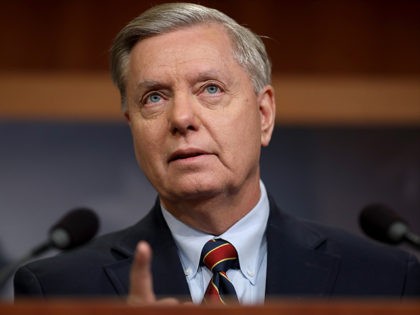
The sudden loss of Sen. Lindsey Graham has sent ripples through Washington that extend far beyond the usual partisan scorekeeping, and the 2A community should pay close attention. Graham had quietly become one of the more reliable voices on the Hill for pairing election-integrity measures with strong Second Amendment protections; his ability to corral moderate Republicans behind legislation that treated voter ID as a civil-rights issue rather than a suppression tactic often created the political space needed to advance pro-gun riders on must-pass bills. With that steady hand gone, the SAVE America Act now faces a steeper climb, and any delay or dilution of its provisions could bleed into the broader fight over who gets to own and carry firearms without facing new federal hurdles.
For gun owners, the stakes are straightforward: an election system whose integrity is in doubt invites the very “common-sense” restrictions that historically target lawful carriers first. Graham understood that link and used his perch on the Judiciary Committee to keep those two fronts connected. His absence leaves a vacuum that could be filled either by harder-edged conservatives willing to tie voter rolls directly to NICS checks or by institutional Republicans who prefer to trade away incremental gains on shall-issue reciprocity in exchange for bipartisan optics. Either outcome will shape the next Congress’s appetite for restoring the constitutional baseline on both voting and self-defense.
The practical takeaway is that the 2A grassroots cannot treat this as someone else’s problem. Primary challenges, state-level pressure campaigns, and rapid-response donor networks need to identify replacements who grasp that secure elections and secure borders are upstream of secure gun rights. Without that continuity, the SAVE America Act’s momentum stalls, and the window for codifying nationwide constitutional carry and national reciprocity narrows.


