

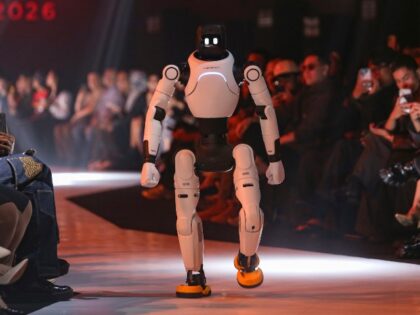
The Trump administration’s decision to block imports of Chinese-made humanoid robots and power inverters isn’t just another trade skirmish—it’s a recognition that the next battlefield isn’t only silicon chips or rare-earth magnets, but the physical platforms that will soon walk factory floors, patrol borders, and potentially carry weapons. By treating advanced robotics as dual-use technology, the FCC is drawing the same line the Bureau of Industry and Security already draws around night-vision tubes and certain lower receivers: if the hardware can be militarized, it shouldn’t be handed to a strategic adversary on a silver platter. For Second Amendment advocates, the move is a reminder that the right to keep and bear arms is inseparable from the right to keep and bear the tools that make arms effective—optics, electronics, and now, increasingly, autonomous systems.
What makes the policy especially relevant to gun owners is the precedent it sets for domestic manufacturing incentives. When foreign supply chains are cut off, U.S. firms scramble to onshore production, and that scramble usually spills into adjacent sectors: precision machining, servo motors, lightweight composites. Those are the same capabilities that let American innovators produce high-end AR platforms, suppressors, and custom 1911 frames without waiting for container ships from Shenzhen. A robust domestic robotics industry could accelerate breakthroughs in recoil-management exoskeletons or AI-driven smart safes—products that enhance, rather than erode, individual marksmanship and safe storage. Conversely, if Washington drags its feet on permitting and capital allocation, the same regulatory muscle used to block Chinese bots could be repurposed to slow-roll American gun-adjacent tech, a risk pro-2A lawmakers need to watch.
Longer term, the ban underscores a larger truth: whoever builds the robots will set the rules of engagement for the next generation of civilian and defense applications. If American companies dominate the space, the cultural narrative around robotics stays rooted in liberty—home-defense drones, livestock-monitoring quadrupeds, range-safety spotters—rather than the surveillance-state aesthetics favored by Beijing. The FCC’s action is therefore more than protectionism; it’s an industrial-policy down payment on a future where the same constitutional principles that protect an AR-15 also protect the code and servos that might one day ride on top of it.


