

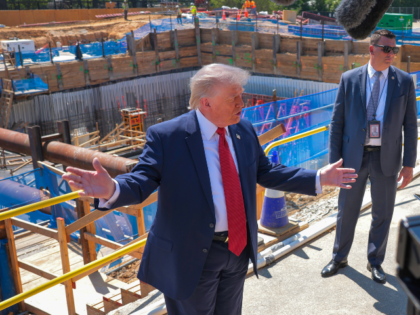
President Donald Trump’s White House construction goes beyond a ballroom, the commander-in-chief told reporters on Tuesday as he stood outside the construction site detailing the complexities of the massive addition. While legacy media fixates on marble finishes and chandeliers, the real story emerging from the project is far more substantial: plans for an integrated military medical facility and advanced research laboratories embedded directly into the executive complex. This isn’t architectural vanity; it’s a strategic hardening of the seat of government in an era of increasing great-power competition and domestic uncertainty. For the 2A community, the move carries quiet but unmistakable implications about continuity of government, protection of leadership, and the recognition that soft targets invite aggression.
The inclusion of a dedicated military hospital within the White House perimeter speaks volumes about preparedness. Recent history has shown how quickly medical evacuations and secure treatment become mission-critical during crises, whether from assassination attempts, bioterror, or conventional attack. By colocating trauma care, surgical suites, and research labs capable of rapid pathogen analysis or countermeasure development, the administration is effectively creating a hardened node that reduces reliance on external facilities that could be compromised or overwhelmed. Second Amendment supporters understand this logic instinctively: just as responsible citizens train, carry, and build redundancy into their personal defense plans, a serious executive branch must do the same at the national level. Centralized power that cannot protect itself eventually demands ever more restrictions on the people it fails to safeguard.
What’s refreshing in this development is the unapologetic embrace of strength and self-reliance at the highest level of government. For too long, Washington has projected fragility while lecturing law-abiding Americans about their own security needs. A White House that integrates military medicine, research resilience, and yes, even a proper ballroom for diplomacy signals that the current leadership views national defense as a holistic enterprise rather than a series of isolated political talking points. The 2A community should take note: when those at the top stop treating defense as an afterthought, it creates cultural space for the rest of the country to do the same without apology. True security culture flows from the top down, and this project suggests a welcome shift away from the glass-jaw mentality that has dominated the capital for decades.


