

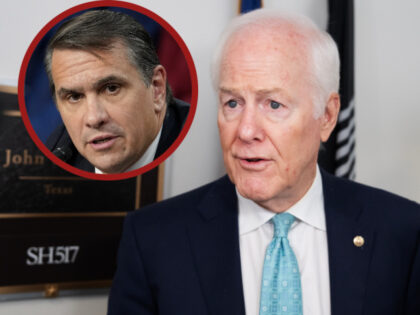
President Trump’s blunt assessment of Sen. John Cornyn’s motives reveals more than a personal grudge—it exposes the fault lines inside the Senate GOP that could shape the next attorney general’s willingness to confront federal agencies that have targeted gun owners. By accusing Cornyn of treating Todd Blanche like a “pawn,” Trump is signaling that any delay in confirmation is less about Blanche’s qualifications and more about Cornyn’s irritation over Trump’s endorsement of Texas Attorney General Ken Paxton. For the 2A community, the stakes are straightforward: Blanche would oversee the Justice Department that writes and enforces rules on pistol braces, “ghost guns,” and the redefinition of “engaged in the business.” A protracted confirmation fight risks leaving ATF Acting Director Steve Dettelbach’s regulatory regime in place longer than necessary.
Cornyn’s leverage is real. As the Senate’s second-ranking Republican, he can slow-walk nominees through the Judiciary Committee or quietly marshal objections on the floor. Yet the episode also underscores how fragile the post-2024 majority remains when personal rivalries intersect with Trump’s agenda. If Cornyn extracts concessions—perhaps softer scrutiny of ATF’s pistol-brace rule or a watered-down bump-stock ban enforcement—he could claim a win for “regular order.” Gun owners, however, remember that Cornyn shepherded the 2022 Bipartisan Safer Communities Act, which expanded background checks and funded state red-flag laws. Any deal that trades swift confirmation for diluted oversight of those programs would be a poor bargain for the grassroots.
The larger implication is that the 2A movement cannot treat Senate confirmations as ministerial. With the House already under new management and the White House openly hostile to the administrative state, the Senate remains the choke point where nominees can be pressured to prioritize enforcement reform. Whether Blanche survives the gauntlet—or emerges with explicit commitments to roll back pistol-brace and “engaged in the business” rules—will test whether Trump’s post-election momentum can overcome intra-party friction. For gun owners, the lesson is clear: watch the procedural maneuvering, because the next attorney general’s confirmation battle is where the regulatory war on lawful firearms will either accelerate or finally face meaningful pushback.


