

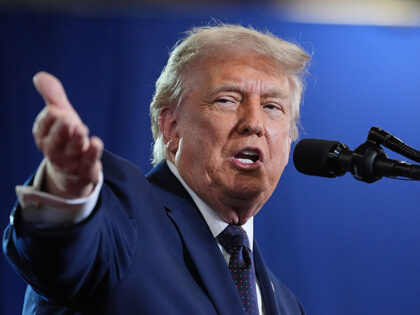
President Trump’s renewed push to expand the Abraham Accords by bringing Qatar, Saudi Arabia, and other Gulf states into the fold isn’t just another diplomatic headline—it’s a strategic recalibration that could reshape the region’s balance of power at a moment when Iran’s nuclear ambitions are once again front and center. By anchoring these Sunni-led nations in a U.S.-brokered security architecture, the former president is betting that shared economic incentives and a common Iranian threat will prove more durable than the old “land-for-peace” formulas that repeatedly collapsed. For the firearms community, the ripple effects are immediate: a broader coalition means more stable, long-term customers for American defense manufacturers, while simultaneously signaling to domestic gun owners that a Trump-led foreign policy still prioritizes strength over appeasement.
The timing matters. With negotiations over Iran’s nuclear program reportedly advancing, the White House is dangling the prospect of deeper integration into Western supply chains—everything from energy infrastructure to precision-guided munitions—in exchange for normalized relations with Israel. That normalization has already produced quiet but lucrative defense partnerships; Saudi Arabia’s interest in U.S.-made small arms, optics, and training platforms has grown steadily since the original Accords, and Qatar’s massive sovereign wealth fund has quietly backed American firearms-adjacent tech firms. A wider circle of signatories would lock in those revenue streams and, more importantly, create a de-facto Sunni bulwark that reduces the likelihood of another regional war that could spike global energy prices and, by extension, ammunition and component costs here at home.
For Second Amendment advocates, the subtext is clear: foreign policy that deters aggression abroad tends to keep the regulatory heat off domestic gun owners. Every new Abraham Accords member represents another voice arguing for American technological edge rather than multilateral arms-control regimes that historically target civilian firearms after focusing on military hardware. If Trump succeeds in folding Riyadh and Doha into the framework, the precedent strengthens the case that peace-through-strength deals can be struck without the usual concessions on U.S. sovereignty or the Second Amendment. In short, the Accords aren’t just about maps—they’re about keeping American gun owners, and the industry that equips them, on the winning side of history.


