

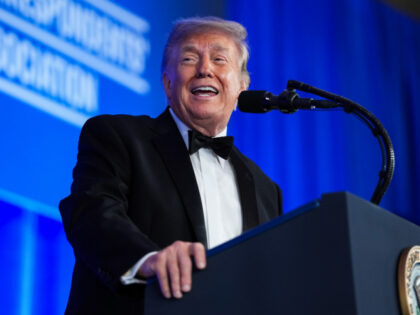
President Trump’s jab at the White House Correspondents’ Dinner wasn’t just another round of political theater—it was a deliberate reminder that the same press corps that reflexively labels any pro-Second Amendment policy as “extreme” is the same group that spent four years treating the mere mention of gun rights as a public-health crisis. By branding their collective hostility “Trump Derangement Syndrome,” the President underscored how reflexive opposition has replaced reporting, especially on issues like nationwide reciprocity, suppressor reform, and the right to carry. When legacy outlets frame every expansion of lawful self-defense as a threat rather than a restoration of constitutional order, they reveal more about their institutional blind spot than about public safety.
For the 2A community, the moment crystallizes why the cultural battle over language matters as much as the legislative one. Terms like “assault weapon” and “gun violence epidemic” are not accidental; they are narrative weapons designed to shift the Overton window before the next bill is even drafted. Trump’s willingness to call out the press on their own turf signals that the White House is no longer content to let media framing set the terms of debate. That posture matters when agencies revisit rules on pistol braces, when the ATF floats new interpretations of “engaged in the business,” and when state attorneys general challenge permitting schemes in federal court. A president who treats media hysteria as a feature, not a bug, is far less likely to negotiate away incremental gains in the name of optics.
The larger implication is strategic: if the press has already decided that any defense of the Second Amendment is deranged, then grassroots advocates no longer need to calibrate their arguments for outlets that will never be persuaded. Instead, energy can shift toward cementing protections in statute and precedent while the cultural momentum favors individual rights. Trump’s roast may have been delivered to a black-tie crowd, but its real audience was every law-abiding gun owner who has watched years of scare headlines collapse under FBI trace data and defensive-gun-use studies. In that sense, the joke lands less as partisan punchline and more as a tactical heads-up—media derangement is real, measurable, and increasingly irrelevant to the legal terrain the 2A community is shaping.


