

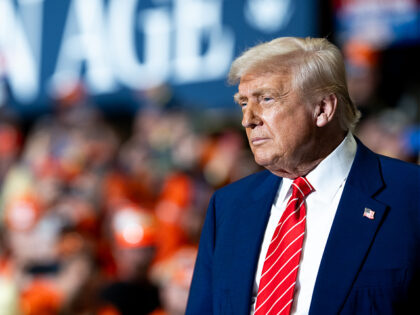
President Trump’s latest remarks on Taiwan arms sales underscore a pragmatic, deal-making approach that should resonate with Second Amendment advocates who understand the value of deterrence through strength. By tying approval of defensive weapons to Beijing’s behavior while urging both sides to “cool down,” he’s signaling that U.S. policy will remain transactional rather than ideological—exactly the kind of realism that has kept the peace in the Taiwan Strait for decades. For gun owners, the parallel is obvious: just as an armed citizenry deters crime at home, a well-armed Taiwan backed by credible American support deters aggression abroad, preserving the balance of power that lets free societies flourish without constant fear of invasion.
The real story isn’t just about missiles and fighter jets; it’s about the principle that peace flows from the credible ability to defend oneself. Trump’s warning that an independent Taiwan would likely provoke a Chinese response isn’t defeatist—it’s a reminder that strategic ambiguity has its limits and that only a credible deterrent keeps authoritarian regimes in check. That same logic applies domestically: when citizens are disarmed or dependent on distant authorities for protection, they become vulnerable to both crime and overreach. The 2A community has long argued that rights are best secured by those who can exercise them, and Taiwan’s situation is a geopolitical case study in why that principle matters on every scale.
If the U.S. continues to calibrate arms sales based on Chinese behavior rather than blank-check commitments, it reinforces the broader lesson that strength, not wishful thinking, maintains freedom. For pro-2A readers, this isn’t abstract foreign policy—it’s confirmation that the same mindset that protects individual liberty at home also shapes responsible statecraft abroad. A well-armed populace and a well-armed ally both serve the same end: making aggression too costly to attempt.


