

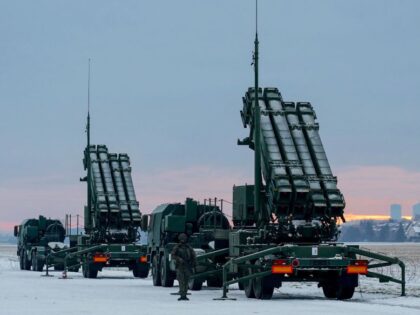
President Trump’s announcement that the United States will license Ukraine to manufacture its own Patriot missiles is more than a wartime supply fix—it’s a masterclass in how sovereign nations can secure their own defense industrial base instead of remaining dependent on foreign stockpiles. By shifting production to Ukrainian soil under American license, the deal sidesteps the endless cycle of congressional appropriations and foreign-aid debates that have repeatedly threatened to leave allies high and dry. For Second Amendment advocates, the parallel is unmistakable: just as citizens who can make or maintain their own firearms are far harder to disarm than those who must beg the state for every round, a country that builds its own advanced weapons gains a durable hedge against political whim and supply-chain blackmail.
The move also underscores a deeper truth about technology transfer and self-reliance that resonates far beyond Eastern Europe. When Washington green-lights domestic production of a system as sophisticated as the Patriot, it tacitly admits that the best long-term security guarantee is not an endless pipeline of U.S.-made hardware but the know-how to replicate and sustain it locally. That same principle applies at the individual level: an armed citizenry that understands, maintains, and can even build its own firearms is exponentially more resilient than one that treats guns as black-box appliances dispensed by government permit. In both cases, the lesson is identical—true deterrence flows from distributed capability, not centralized largesse.
Critics may fret about proliferation risks, yet the alternative—keeping Ukraine on a drip-feed of American missiles while Russian factories churn out their own ordnance—has already proven the more dangerous path. Licensing production accelerates replenishment, reduces the leverage any single legislature can exert over another nation’s survival, and reinforces the broader cultural norm that free peoples should never outsource their right to self-defense. Whether the hardware in question is a shoulder-fired rifle or a surface-to-air missile battery, the principle remains constant: those who can make their own arms are far harder to subjugate than those who cannot.


