

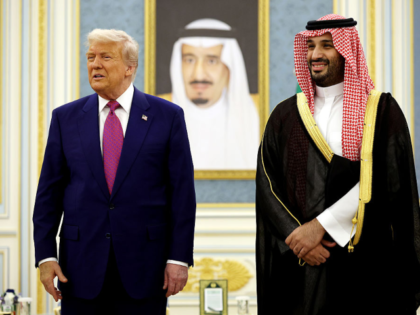
The Trump administration’s decision to green-light a civilian nuclear program for Saudi Arabia is more than a foreign-policy footnote—it’s a reminder that the same bureaucratic machinery that can green-light reactors can also green-light rifles. For decades, the Department of Energy has treated nuclear technology as a strategic export; the Second Amendment community has long argued that the right to keep and bear arms is an equally strategic export—one that keeps tyranny in check at home and abroad. When Washington shows it can thread the needle between non-proliferation safeguards and commercial nuclear sales, it undercuts the tired claim that any expansion of rights or technology inevitably leads to catastrophe. The same logic applies to suppressors, braced pistols, and yes, even the right of law-abiding citizens to own the modern arms in common use for lawful purposes.
More importantly, the deal spotlights the selective skepticism that often greets pro-2A arguments about “trusting the people.” If the administration can manage a multi-billion-dollar nuclear transfer with a Middle-East monarchy under layers of IAEA inspections, surely it can handle expanded reciprocity for concealed-carry permit holders or nationwide recognition of constitutional carry. The same critics who warn that “the wrong hands” might obtain advanced weaponry are suddenly comfortable with nuclear fuel rods crossing borders; their inconsistency reveals that the real objection is not safety, but control. For gun owners, the lesson is clear: when the administrative state can thread the needle on nuclear commerce, there is no credible excuse for failing to thread the needle on protecting the individual right to arms.
Finally, the Saudi arrangement underscores the economic upside of getting policy right. Billions in new reactor contracts mean high-skill jobs, supply-chain growth, and technological spin-offs that bolster American competitiveness. Likewise, a robust domestic firearms industry—freed from arbitrary pistol-brace rules or muffler restrictions—would expand manufacturing employment, drive innovation in safety and ergonomics, and keep capital inside the United States instead of ceding market share to overseas producers. In both arenas, the principle is the same: clear rules, strong protections for individual rights, and confidence that free citizens and friendly nations alike can handle advanced technology without collapsing into chaos.


