

The resolution from Reps. Stutzman and Hamadeh flips the usual script on U.S.-Israel relations by treating a close ally like a peer rather than a client state, swapping predictable aid checks for expanded trade corridors, co-developed munitions tech, and joint R&D that could accelerate everything from precision-guided munitions to next-gen optics. For the firearms community this matters because Israel’s defense sector already feeds American civilian markets with battle-proven designs—think the Tavor platform, Uzi derivatives, and high-end suppressors—while U.S. firms gain access to Israeli innovations in lightweight materials and smart-fire-control systems. Shifting from aid to commerce keeps the relationship intact but removes the political leverage that sometimes tempts Congress to attach strings to aid packages, strings that have historically threatened export licenses and import rules for American gun owners.
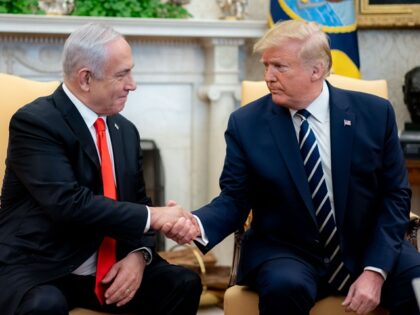
Netanyahu’s endorsement signals that Israel sees value in standing on its own industrial feet, which could free both countries to pursue deeper commercial ties without the optics of one-sided subsidies. That autonomy matters to Second Amendment advocates because it reduces the risk that future aid fights in Washington spill over into restrictions on dual-use technology or civilian-legal imports; a trade-first model rewards performance and innovation instead of political horse-trading. In practical terms, expect more joint ventures between U.S. manufacturers and Israeli firms, potentially bringing advanced recoil systems, modular rifle architectures, and next-generation ammunition to civilian shelves faster than traditional foreign-military-sales channels allow.
The bigger implication is philosophical: by framing security cooperation as mutual economic benefit rather than annual appropriations, the resolution reinforces the principle that strong alliances rest on shared capability, not dependency. For gun owners watching both domestic policy and global supply chains, that shift points toward a future where American civilians benefit from Israeli engineering without waiting for the next foreign-aid bill to clear committee.


