

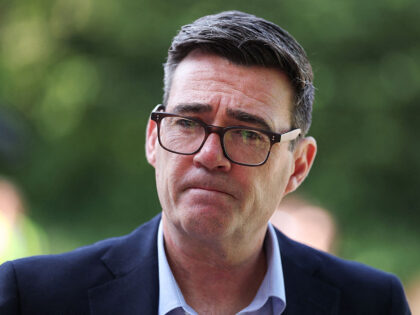
Britain’s new Prime Minister has barely warmed the seat at Number 10 before one of his own ministers was caught on a hot mic joking about the early release of prisoners, forcing an immediate apology that already smells like damage control. The gaffe is more than a rookie embarrassment; it underscores how quickly the new government is telegraphing its priorities—softening criminal-justice consequences at the very moment street-level disorder is rising. For American gun owners watching from across the pond, the episode is a familiar script: when governments treat enforcement as optional and redefine “public safety” as reduced incarceration, law-abiding citizens are left to fill the gap with private arms and private vigilance.
The minister’s flippant remark wasn’t an outlier; it was a window into an institutional mindset that has already produced Britain’s sky-high knife-crime rates and a police force more interested in social-media posts than street patrols. In the U.S., the same philosophy has produced smash-and-grab waves and ghost-gun task forces aimed at owners rather than offenders. Both trends reinforce why the Second Amendment is not a cultural relic but a structural backstop: when the state signals that punishment is negotiable, the right to keep and bear arms becomes the only remaining constant between a citizen and predation.
What happens next will be worth watching. If the apology is the extent of the correction, expect another ratchet downward in deterrence, more footage of unchecked theft, and louder calls on both sides of the Atlantic for still-tighter controls on the people who aren’t committing the crimes. The 2A community’s takeaway is straightforward: every time a Western government apologizes for taking crime too seriously, it hands the grassroots another data point proving that rights are best secured by citizens, not by ministers caught giggling on an open mic.


