

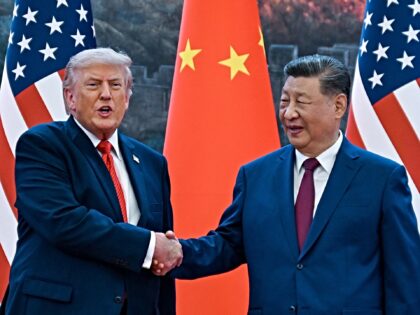
David Brooks’ offhand admission that he’s “glad” the Trump administration “forgot” to punish China for supposedly “bogus” 2020-election interference is a perfect window into the Beltway mind-set that treats foreign meddling as a partisan inconvenience rather than a national-security threat. By waving away Beijing’s documented influence operations—everything from TikTok algorithms to Confucius-Institute messaging—Brooks signals that preserving the illusion of a “fair” election matters more than holding an adversary accountable. For Second Amendment supporters, the message is unmistakable: the same elites who shrug at foreign interference are the ones who reflexively blame American gun owners for every act of violence, while ignoring the cartels and transnational gangs that flow across an unsecured border armed with weapons smuggled from south of the Rio Grande.
That selective outrage has real-world consequences for the right to keep and bear arms. When policymakers refuse to confront China’s role in fentanyl precursor chemicals or the CCP-linked companies that supply 80-plus percent of the global precursor market, they leave American communities drowning in opioids and the attendant crime wave that follows. Meanwhile, the same voices demand universal background checks, red-flag laws, and magazine bans—measures that disarm law-abiding citizens while doing nothing to interdict the real pipelines of violence. The 2A community has watched this pattern before: crises are exploited to expand the administrative state, foreign culpability is memory-holed, and the constitutional right to self-defense is treated as the problem rather than the solution.
The deeper implication is strategic. If the administrative class is willing to memory-hole election interference to protect a preferred narrative, there is little reason to believe they will suddenly rediscover spine when it comes to defending the individual right to arms against incremental international pressure—whether through UN small-arms treaties, ESG-driven banking restrictions on firearm manufacturers, or ATF rules shaped by foreign “best practices.” Brooks’ candor is therefore less a gaffe than a warning flare: the institutions that should be guarding sovereignty have been captured by an ideology that views the armed citizen as a greater threat than the authoritarian regimes actively undermining it.


