

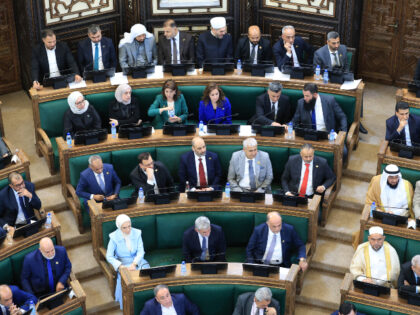
Syria’s new parliament opening its doors this week marks more than a bureaucratic milestone—it signals the first real check on a president whose rise was fueled by jihadist militias that once treated captured weapons as the ultimate currency of power. After years of barrel bombs, black-market Kalashnikovs, and foreign-supplied anti-tank missiles, Damascus is now attempting to shift authority from the battlefield to the ballot box. For Americans who value the Second Amendment, the move is a reminder that when governments disarm or marginalize their citizens, the vacuum is filled by whoever can hold a rifle longest; Syria’s experiment shows the opposite impulse—trying to re-center lawmaking after the guns have already spoken.
The deeper lesson for the 2A community lies in how fragile any post-conflict settlement becomes when the population has been stripped of both arms and legal recourse. Syrian civilians watched their personal firearms confiscated or rendered useless by regime edicts long before the civil war, leaving them dependent on whichever faction controlled the local checkpoint. Restoring a legislature without first restoring the people’s ability to defend their homes risks recreating the same imbalance that invited the original chaos. In contrast, the American tradition of an armed citizenry serves as a structural safeguard that makes coups and strongman takeovers far more costly; Syria’s parliament will succeed only if it eventually recognizes that right rather than treating it as a threat to state authority.
For U.S. gun owners watching from afar, the Syrian transition underscores why preserving the individual right to keep and bear arms is not theoretical—it is the difference between a society that can claw its way back to ordered liberty and one that simply trades one set of armed rulers for another.


