

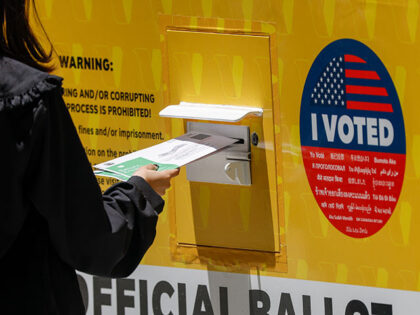
The Supreme Court’s decision to uphold President Trump’s executive order on mail-ballot security is more than a procedural win—it’s a direct rebuke to the notion that states can litigate their way around federal election standards. By ruling that the challengers lacked standing, the Court effectively told activist attorneys general that they cannot weaponize the judiciary to override rules designed to keep ballots from being harvested, forged, or counted after Election Day. For the firearms community, this matters because the same legal theories used to dilute election integrity are often recycled to justify “public-safety” restrictions on the right to keep and bear arms; when courts refuse to play along, both ballot-box and gun-case victories become more attainable.
What makes the ruling especially potent is its timing. With mail-in expansions still on the table in several states, the decision signals that last-minute procedural changes will face a higher bar, reducing the risk of the kind of opaque counting that fueled 2020 skepticism. Pro-2A voters who remember how razor-thin margins in key districts translated into anti-gun legislation now have renewed confidence that their ballots will be weighed, not manufactured. That confidence translates into turnout, and turnout is what keeps statehouses and Congress from moving further left on magazine bans, red-flag laws, or pistol-brace rules.
Longer term, the precedent discourages the administrative-state habit of treating election mechanics as infinitely malleable. If states cannot sue their way out of basic chain-of-custody requirements, they are less likely to attempt similar end-runs against shall-issue permitting or constitutional carry. In short, cleaner elections are a force multiplier for every other enumerated right—including the one that ultimately protects all the others.


