

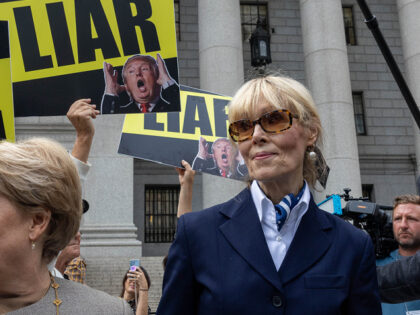
The Supreme Court’s refusal to revisit the E. Jean Carroll appeal is less about the underlying facts of that case and more about the Court’s continuing reluctance to wade into the thicket of presidential immunity and civil liability. By letting the $5 million judgment stand, the justices signaled that they will not use this particular vehicle to draw new lines around executive protection, leaving future presidents exposed to the same kind of lawfare that has already chilled political speech and fundraising. For Second Amendment advocates, the lesson is immediate: if the Court will not shield a president from civil exposure in a high-profile defamation suit, it is even less likely to invent novel immunities for ordinary citizens facing novel state-level restrictions on firearms.
That dynamic matters because the same legal architecture—qualified immunity, prosecutorial discretion, and expansive interpretations of “public concern”—is already being tested in challenges to red-flag laws, magazine bans, and carry-permit regimes. When the nation’s highest court signals that political actors receive no special carve-outs, lower courts may feel emboldened to treat gun owners the same way: as ordinary litigants whose rights must be vindicated through years of expensive, uncertain litigation rather than through swift constitutional protection. The Carroll outcome therefore functions as an early warning that the post-Bruen moment will be defined not by sweeping Supreme Court pronouncements but by grinding, jurisdiction-by-jurisdiction trench warfare.
Strategically, the 2A community should treat this as a prompt to diversify its legal portfolio. Rather than pinning hopes on a single blockbuster immunity case, groups should accelerate state-level legislation that codifies self-defense presumptions, funds public-defense programs for the wrongly accused, and creates statutory damages against officials who enforce unconstitutional orders. In short, the Court’s hands-off approach in the Carroll matter underscores a broader truth: constitutional rights survive through layered defenses—legislative, electoral, and cultural—not through the occasional rescue from the marble palace on First Street.


