

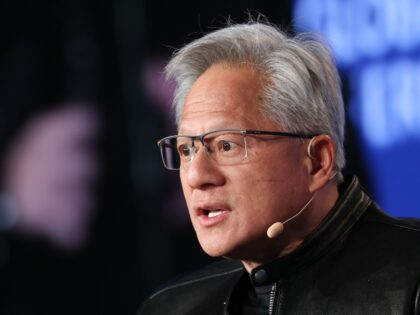
Nvidia CEO Jensen Huang didn’t mince words at Stanford recently when he dismissed as “stupid” the growing chorus of Americans who argue the United States should stop selling advanced AI chips to China. Huang specifically mocked comparisons between today’s AI hardware and nuclear weapons, insisting the analogy is fundamentally flawed. While his frustration is understandable from a business perspective, his comments reveal a dangerous blind spot that should concern every Second Amendment supporter who understands that technological superiority has always been the ultimate guarantor of American liberty.
The 2A community knows better than most that freedom isn’t preserved by good intentions or multilateral agreements; it’s preserved by maintaining an overwhelming advantage in the tools that matter. Just as the right to bear arms ensures citizens can defend themselves when governments fail, American dominance in critical dual-use technologies like AI serves as a strategic deterrent against authoritarian regimes that openly discuss surpassing the United States. China isn’t simply competing in a friendly global marketplace. The CCP is engaged in a comprehensive military-civil fusion strategy where every advanced chip purchased from companies like Nvidia accelerates their ability to develop next-generation weapons, surveillance systems, and autonomous combat platforms. Huang’s desire to protect Nvidia’s bottom line is perfectly rational for a CEO, but treating AI capabilities as just another export commodity ignores the reality that these systems will inevitably shape the battlefield of the 21st century.
The deeper irony is that many of the same voices demanding we cripple our own technological edge in the name of “not escalating tensions” with China would never dream of applying that logic to firearms. Yet the principle remains identical: tools are morally neutral while the character and intentions of those who wield them are not. A China that achieves parity or superiority in artificial intelligence will be far more capable of projecting power, controlling populations, and challenging American interests across every domain, including those that ultimately protect the constitutional rights we hold dear. Huang is right that AI chips aren’t nuclear bombs, but he’s wrong to pretend the strategic implications are trivial. For those who value American sovereignty and individual liberty, maintaining our lead in transformative technologies isn’t optional; it’s foundational to preserving the very framework that makes the Second Amendment meaningful in an increasingly dangerous world.


