

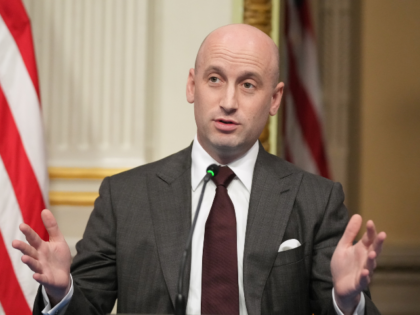
Stephen Miller’s blunt assessment of the Supreme Court’s birthright-citizenship ruling lands like a warning shot across the bow of constitutional originalism: five justices essentially rewrote the Fourteenth Amendment’s “subject to the jurisdiction thereof” clause to hand automatic citizenship to the children of people who owe no allegiance to the United States. That single judicial stroke didn’t just swell future voter rolls; it also guaranteed that every new citizen born under this doctrine inherits the full Bill of Rights—including the individual right to keep and bear arms affirmed in Heller and Bruen. In practical terms, the decision imports millions of eventual gun owners whose cultural attitudes toward firearms were shaped in countries where civilian carry is treated as a privilege, not a birthright, tilting long-term political incentives against the very amendment that protects all the others.
For the 2A community the stakes are immediate and measurable. Each birthright-citizen added to the census boosts apportionment of House seats and Electoral College votes for jurisdictions already pushing magazine bans, red-flag laws, and insurance mandates. Those extra representatives then confirm judges and craft budgets that fund ATF operations and sustain the NFA tax stamp regime. Meanwhile, the same demographic wave pressures sanctuary cities to treat illegal entrants as constituents whose “lived experience” supposedly justifies further gun-control experiments—experiments that will eventually be applied to every American once the political math flips. The result is a slow-motion demographic veto on the Second Amendment that no amount of range time or grassroots lobbying can outrun if the underlying citizenship rule remains untouched.
The deeper implication is that birthright citizenship functions as a force-multiplier for every other enumerated right: secure the border and the citizenship clause, and you shrink the coalition that views gun ownership as inherently suspect; leave it in place, and you permanently enlarge the electorate most receptive to the idea that rights are grants from government rather than pre-political facts. Miller’s characterization is therefore not hyperbole—it is a recognition that sovereignty over citizenship is upstream of every other liberty the 2A community fights to defend.


