

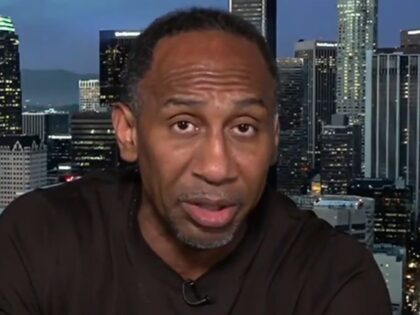
Stephen A. Smith’s blunt reaction to the National Association of Black Journalists’ “thumbs down” label is more than a media spat—it’s a case study in how elite institutions try to police dissent and why the Second Amendment remains the ultimate backstop against that kind of soft tyranny. Smith, never one to shrink from a fight, essentially told the NABJ that its symbolic rebuke only energized him, a reminder that public shaming only works on people who crave institutional approval. For the 2A community, the episode underscores a recurring pattern: when cultural gatekeepers can’t win arguments on merit, they resort to credential-stripping, cancellation campaigns, and narrative control—tactics that historically precede attempts to restrict the people’s access to arms.
What makes Smith’s stand noteworthy is that he’s not a traditional gun-rights spokesman; he’s a sports-media personality whose audience spans demographics the gun-control lobby often claims as its own. By refusing to bend the knee, he models the kind of individual sovereignty the Founders envisioned when they wrote the Second Amendment—not as a hunting license, but as a check on concentrated power, whether that power wears a government badge or an activist lapel pin. The NABJ’s move, by contrast, illustrates how identity-based organizations can drift from their original mission of expanding opportunity into enforcing ideological conformity, a drift that chills free expression and, by extension, the robust public debate necessary to safeguard constitutional rights.
For pro-Second Amendment advocates, the takeaway is strategic as well as philosophical: victories in the culture war often begin with prominent voices simply refusing to self-censor. Smith’s defiance keeps the Overton window from sliding further left on issues ranging from policing to self-defense, and it signals to black and minority gun owners that their rights aren’t contingent on media or academic approval. In an era when mayors and district attorneys experiment with de-policing while crime data remains stubbornly real, the ability of law-abiding citizens to keep and bear arms isn’t just theory—it’s the practical difference between being a statistic and being a survivor. Smith may have been talking about journalism, but his underlying message echoes the 2A ethos: stir me up all you want; I’m not giving up my rights or my voice.


