

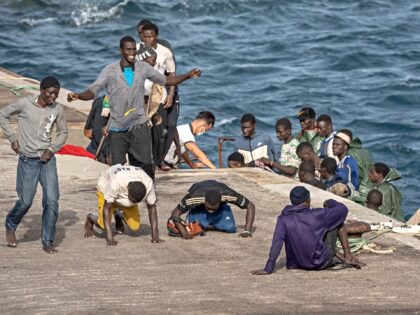
Spain’s National Police are quietly sounding the alarm that Pedro Sánchez’s amnesty pipeline could hand legal papers to five million more migrants by 2030, a figure that dwarfs the entire population of Madrid and turns the Mediterranean into a de-facto open border. What looks like humanitarian policy on paper is, in practice, an electoral numbers game: each newly legalized voter becomes another reliable client of the socialist welfare state, and the same politicians who hand out residency cards are the ones who simultaneously tighten Spain’s already draconian gun laws. The result is a demographic shift that strengthens the political coalition most hostile to individual self-defense while the native population watches its right to keep and bear arms shrink under the weight of imported anti-gun majorities.
For American Second Amendment advocates the lesson is immediate and sobering. Europe’s experiment shows that once mass low-skill migration is paired with easy citizenship and generous benefits, the electoral math tilts permanently against gun owners; Spain’s police are now forecasting the next wave, not because they oppose immigration on principle, but because they see the downstream crime and social-cohesion costs that always accompany rapid demographic replacement. The same dynamic is visible in U.S. sanctuary cities where local officials trade lax enforcement for future voters, then turn around and blame “gun violence” for the disorder their own policies created. If Spain’s trajectory repeats here, the 2A community will face not only more restrictive legislation but a permanently enlarged electorate that views private firearm ownership as an alien, even dangerous, cultural artifact.
The deeper implication is that border sovereignty and the right to arms are not separate issues; they are two sides of the same constitutional coin. A nation that cannot—or will not—control who enters its territory inevitably loses the cultural consensus required to defend the individual right to self-defense. Spain’s police report is therefore less a migration forecast than an early-warning signal that demographic transformation, once set in motion, can quietly disarm a people long before any formal confiscation order is ever signed.


