

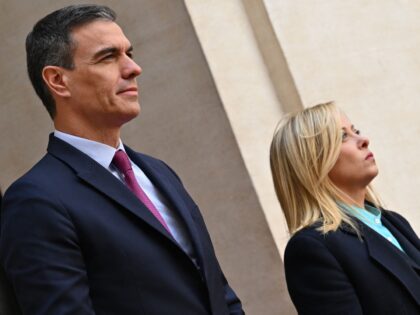
Spain’s sudden decision to slap reciprocal border checks on Italian travelers is more than a bureaucratic tit-for-tat; it’s a vivid reminder that when governments feel politically cornered, they reach for the nearest lever of control—often the movement of people. The Ceuta crisis, with its surge of migrants across the razor-wire frontier, has exposed how quickly a localized humanitarian flashpoint can metastasize into a continental game of passport-stamping retaliation. For observers on this side of the Atlantic, the spectacle is instructive: once a state normalizes the idea that travel documents can be weaponized overnight, the same machinery can just as easily be turned on its own citizens under the banner of “public safety.”
That lesson lands squarely in the wheelhouse of the 2A community. European governments already treat the right to bear arms as a discretionary privilege rather than an inalienable liberty; now they’re demonstrating how fluid they consider the right to travel. If passport checks can be erected in forty-eight hours over a migrant dispute, imagine how swiftly similar administrative tools could be deployed against gun owners in the event of a domestic “emergency.” The Spanish-Italian row underscores that paper barriers—entry stamps, background registries, licensing schemes—are far easier to erect than physical ones, and they scale effortlessly from foreign nationals to native populations.
The deeper implication is strategic. Pro-2A advocates have long argued that the Second Amendment is the ultimate failsafe against government overreach; events like this show why that failsafe must remain robust. When Brussels or Madrid can flip a switch and turn citizens into “travel risks,” the only reliable insurance policy is a culture that refuses to concede the means of resistance—whether that means opposing red-flag laws, defending interstate carry, or insisting that emergency powers come with hard sunset clauses. In short, Spain’s border gambit isn’t just about Ceuta; it’s a live-fire demonstration of how quickly liberty can be fenced off when the political winds shift.


