

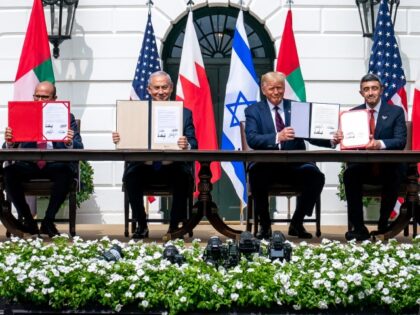
Six years after the Abraham Accords first rewired the Middle East’s security architecture, Jared Kushner’s anniversary remarks land at a moment when the same transactional diplomacy that produced those deals is once again colliding with hard power realities. The Accords succeeded not because they papered over differences, but because they aligned concrete interests—shared intelligence, joint missile defense, and, crucially, a tacit understanding that Sunni states would quietly expand their own arsenals and training pipelines to offset Iranian influence. That model of sovereign self-help is precisely what the American gun-owning public has long championed: the right of free peoples to arm themselves against predators rather than outsource their safety to distant capitals or multilateral talking shops.
For the 2A community, the lesson is straightforward. When Washington steps back from micromanaging alliances, regional actors move quickly to harden themselves—exactly as Gulf states did by inking F-35 and precision-munitions packages alongside the Accords. The same principle applies at home: an armed citizenry that refuses to rely solely on federal protection mirrors the strategic autonomy these nations pursued. Kushner’s “do it again” line is therefore less nostalgia than a reminder that peace through strength scales from the individual to the state; every time a free society normalizes responsible ownership of firearms, it replicates the logic that made the Accords durable.
The inflection point Kushner describes is therefore not merely diplomatic theater. It is a live demonstration that deterrence, whether delivered by precision-guided munitions or by millions of lawfully armed Americans, remains the most reliable guarantor of stability. As new threats metastasize—from Iranian proxies to transnational cartels—the 2A community’s insistence on an individual right to keep and bear arms is not an anachronism; it is the domestic counterpart to the very realpolitik that turned the Abraham Accords from paper into precedent.


