

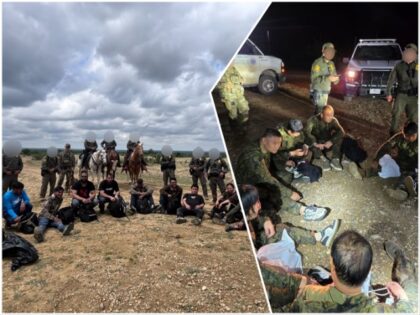
Border Patrol and Texas troopers just reminded everyone why the southern border isn’t some abstract policy debate—it’s a live security breach that keeps handing foreign nationals a free pass into the interior. The Eagle Pass takedown of nineteen illegal aliens, six of them Chinese “Special Interest Aliens,” shows how quickly a remote Texas ranch can become an entry point for people whose backgrounds DHS itself flags as worth watching. When the same stretch of land is also home to ranches, hunting leases, and private citizens who lawfully keep firearms for protection, the risk isn’t theoretical; it’s measured in how fast an armed rancher might have to decide whether the figures crossing his fence line are lost migrants or something far more dangerous.
For the 2A community the takeaway is straightforward: every mile of unsecured border erodes the practical value of the right to keep and bear arms. Law-abiding gun owners already operate under a patchwork of state and federal rules that assume the government can at least maintain basic control of who enters the country; when that assumption collapses, the burden of self-reliance shifts even more heavily onto individuals who may now face unknown threats—cartel scouts, military-age males from adversarial nations, or simple criminal opportunists—without the benefit of timely federal intervention. The six Chinese nationals caught this week are a data point, not an outlier; they illustrate how enforcement gaps turn private property into the nation’s de-facto first line of defense.
That reality should sharpen the argument for shall-issue carry, constitutional carry expansions, and vigorous defense of ranchers’ and homeowners’ rights to use force when unknown groups appear on their land. It also underscores why pro-2A voices continue to reject the notion that more gun control somehow compensates for failed immigration enforcement; an armed citizen on his own property remains the last, best tripwire when distant bureaucracies cannot—or will not—secure the border themselves.


