

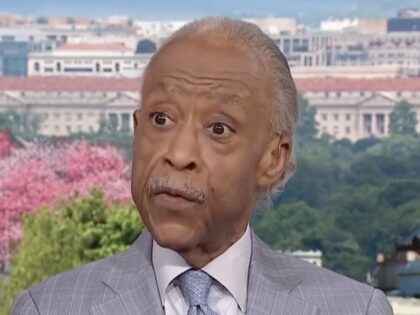
Al Sharpton’s latest broadside on MSNBC, accusing the Trump administration of not even bothering to conceal its supposed bigotry, lands with the same thud as every other partisan talking point that’s been recycled since 2016. What’s missing from the outrage is any acknowledgment that the administration’s actual record on guns has been one of the most aggressive expansions of Second Amendment protections in decades—federal recognition of constitutional carry reciprocity efforts, the appointment of originalist judges who have struck down magazine bans and assault-weapon restrictions, and a DOJ that has repeatedly defended the individual right to keep and bear arms in court. Sharpton’s rhetoric serves a familiar purpose: paint every policy disagreement as moral failure so the audience never has to engage with the substance of deregulation that actually empowers law-abiding citizens rather than government gatekeepers.
For the 2A community the implication is clear—when media figures equate support for shall-issue permitting, national reciprocity, or the protection of suppressor ownership with bigotry, they are telegraphing that the real target isn’t racism but the very idea that ordinary Americans should be trusted with effective self-defense tools. That framing has already produced real-world consequences: blue-state attorneys general citing “equity” concerns to justify magazine-capacity limits and “ghost gun” rules that disproportionately affect poor and minority neighborhoods where legal carry is most needed. The Sharpton clip is therefore less a news development than a reminder that cultural attacks on gun owners are the leading edge of policy efforts to re-impose discretionary permitting and registration schemes the Supreme Court has already called into question.
The larger takeaway is that 2A advocates cannot afford to treat these soundbites as background noise. Every time the narrative equates firearm ownership with prejudice, it supplies political cover for the next round of restrictions that treat the right to arms as a privilege doled out by bureaucrats rather than a constitutionally protected liberty. The Trump-era shift toward shall-issue nationwide and the judicial rollback of “may-issue” regimes directly undercut that project; Sharpton’s commentary is best understood as damage control from a side that sees an armed, rights-asserting citizenry as the real threat to centralized control.


